Apple Podcasts
 Podbean
 Spotify
 Amazon Music
 iHeartRadio
 Player.fm
 Podchaser

Want Better Rhythm on Your Saxophone? Start With Funk
How can adult sax players improve their rhythm and timing? Learn to count each beat in smaller pieces, feel where the syncopation sits, and play short funk horn hits along with a track. Then record yourself to check you’re truly locked in.
Quick Takeaways
- Count beats out loud: “one-and-two-and” for eighth notes.
- Syncopation means accenting the weaker beats, like the “and.”
- Listen, clap, sing, then play each rhythm, in that order.
- Record yourself and check your waveform lines up with the track.
Why do so many adult sax players struggle with rhythm?
It’s one of the most common problems we see at Sax School. Thousands of adult students come to us, and timing trips up most of them.
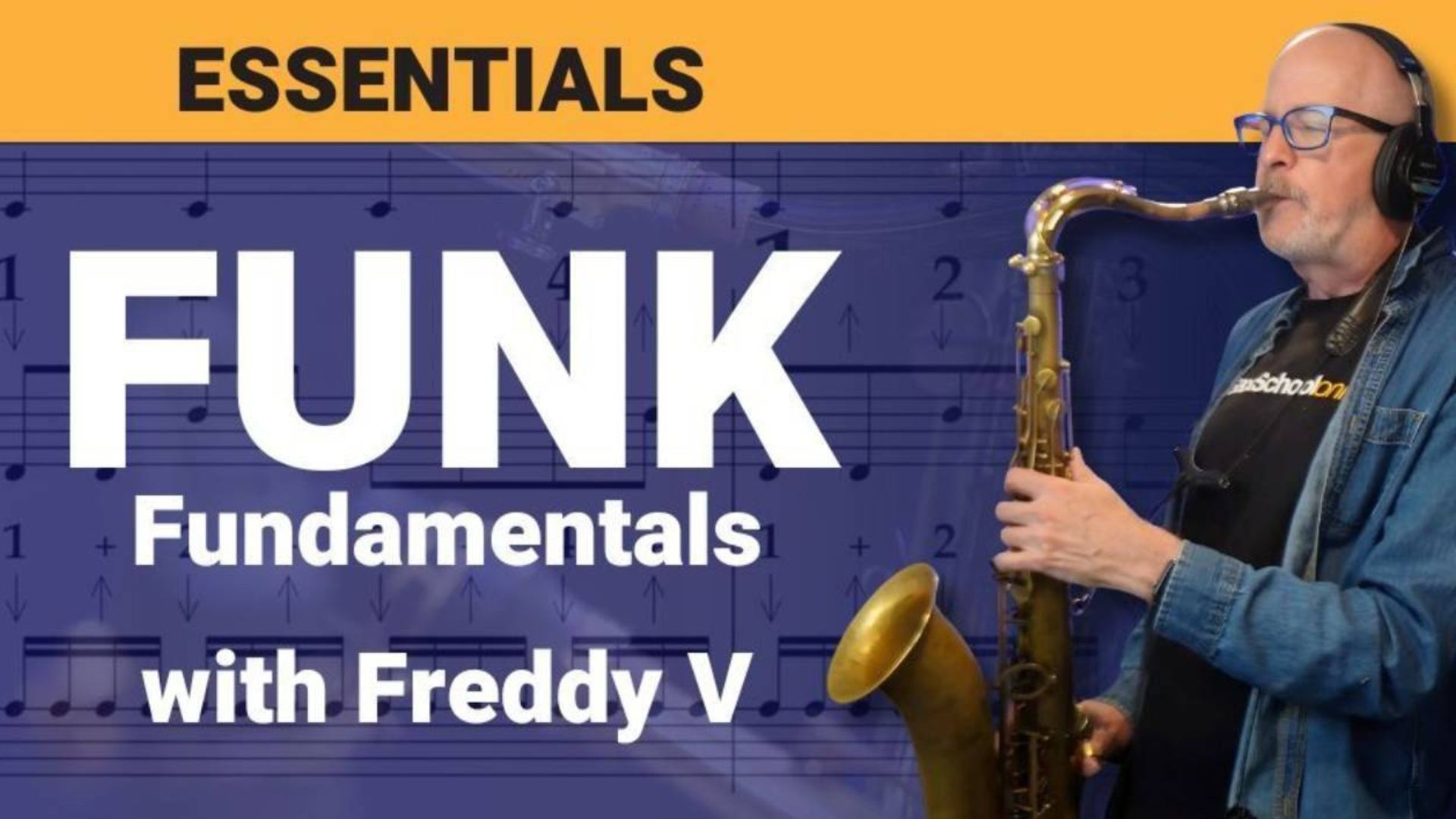
So I asked an expert. Sax School Tutor Fred Vigdor has toured the world with the Average White Band for years. He plays the famous Pick Up the Pieces solo night after night. He built a course for us called Fred’s Funk Fundamentals.
This post walks you through his first lesson. Funk is a brilliant way to fix your timing. It changes how you play rhythm. It also changes how you count and think about it.
As Fred puts it:
“Forget everything you know about catchy melodies for a second. Funk is all about rhythm.”

How do you count rhythm on the saxophone?
Start by breaking each beat into smaller parts. Fred calls these subdivisions.
Most popular music is in 4/4 time. That means four beats in every bar. Each beat is a quarter note, or crotchet. You count them as “one, two, three, four.”
Split each beat in two and you get eighth notes, or quavers. There are eight in a bar. Count them as “one and two and three and four and.”
Here’s Fred’s simple way to feel it. Tap your foot to the music. When your foot hits the floor, that’s the downbeat. When it comes up, that’s the upbeat. The upbeat is the “and.”
Go one step further and you get 16th notes, or semiquavers. There are 16 in a bar. Count them as “one-e-and-a, two-e-and-a.” For now, stick to eighth notes. Fred’s first lesson does too.
What is syncopation, and why does it matter?
Downbeats are the strong beats. They’re the easiest to feel. Fred compares them to a heartbeat. That’s why we call the beat of a song its pulse.
Syncopation is when you put the accent somewhere weaker or unexpected. Usually that’s the upbeat, the “and.”
In Fred’s demo, the bass first plays steady eighth notes on the downbeats. Then it shifts the accent onto the upbeats. Suddenly the music moves forward. There’s a little surprise in it.
That’s the feeling you’re after. In Fred’s words, “syncopation is the essence of funk.”
What made James Brown’s Cold Sweat so important?
Funk started in the late 1960s with James Brown. Cold Sweat, released in 1967, is generally seen as the first funk recording.
Before that, soul and R&B leaned hard on the backbeat. That’s beats two and four. Fred plays the two biggest soul hits of 1967 to show it. The weight sits on two and four, like rock and roll.
Cold Sweat flips that. The big accent lands on beat one of every bar. That’s where the phrase “on the one” comes from. A strong one grounds the groove. That leaves the rest of the bar free for syncopation.
Funk also keeps things simple. Most grooves use just one or two chords. That keeps your attention on the rhythm. It makes the music hypnotic.
How does a funk horn section fit into the groove?
Fred says
“A good funk groove is like a musical puzzle, with each instrument providing a piece that creates the whole picture.”
In Cold Sweat, the drums hit the backbeat plus the “ands” of three and four. The bass accents the one and those same “ands.” James Brown usually had two guitarists. One plays a simple eighth-note line. The other acts almost like percussion.
Then the horns come in. They play just two quarter notes, on beats two and three. Yet those two notes are the most recognisable part of the whole groove.
That’s the lesson for sax players. In funk, the horns are part of the rhythm section. You’re punching short, sharp bursts, not playing long melodies.
There’s a great story behind it. Saxophonist Pee Wee Ellis was the band leader. After a gig, James Brown sang him an idea in his dressing room. Pee Wee wrote it down, then added a touch of the Miles Davis he’d been listening to. That became the horn part.
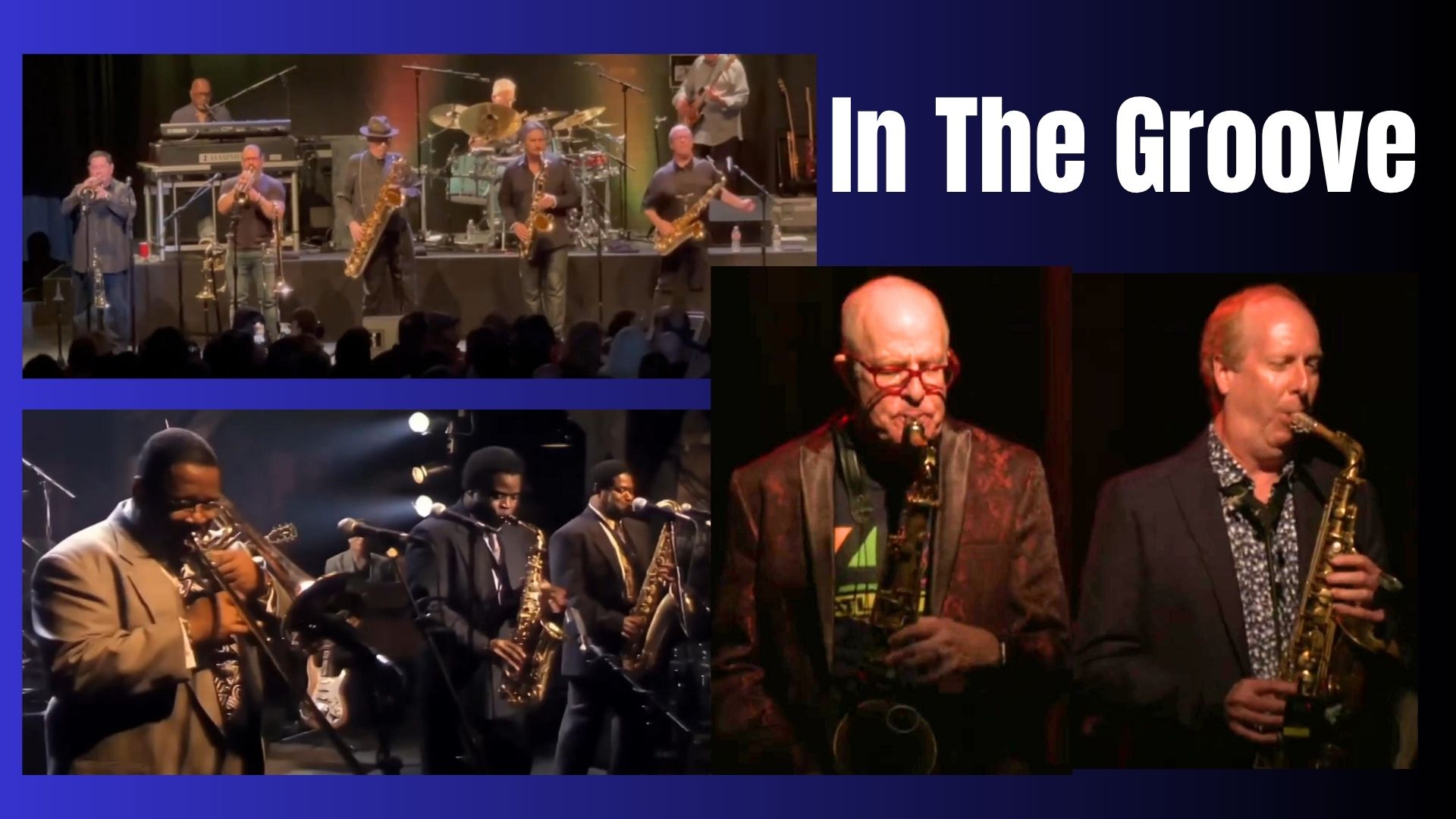
Every great section feels the groove the same way. That goes for two saxes, a three-piece like Maceo Parker, Fred Wesley and Pee Wee Ellis, or a big section like Tower of Power.
What’s a good exercise to lock into a groove?
Fred uses another James Brown tune, Super Bad. The horn hits are simple. Even better, they’re all on a single note. So you have no fingerings to worry about. You can focus fully on rhythm.
In this groove, one of the guitars lays down the eighth notes. Listen for that part first. Get it into your head. You want to feel those eighth notes without thinking about them.
Then follow Fred’s four steps. First, close your eyes and listen to the horn hits. Notice how your part fits with the rhythm section. Second, clap the rhythm. Third, sing it. Fourth, play it along with the track.
Reading the music is good practice. But Fred prefers listening and copying here. It helps you take the rhythm in. A groove is all about repetition, and each phrase repeats the same rhythm. That makes it perfect for learning by ear.
How can you tell if your timing is accurate?
Record yourself. Drop one of the play-along loops into recording software like Audacity or Logic. Make a separate track for your sax. Record yourself playing along, then listen back.
Here’s how you’ll know. “If you’re really locked in, you won’t even hear your sax.” It’ll sound like one more player in the section.
You can check with your eyes too. Look at the waveforms. Does your sax start a little before or after the horns on the track? Or do they line up?
Think of each note sitting on a grid. You want it right in the centre. Not ahead of the beat. Not behind it. When every horn player places the note in the same spot, the section sounds like one instrument.
Recording is one of my favourite habits for any adult learner. I cover more in our 35 lessons from teaching 10,000 adult sax players.
How should you start and stop each note?
This is where a lot of timing problems hide. A common mistake is taking a fresh breath for every note. It sounds like “huh, huh.” That makes it very hard to place your attack accurately.
Keep your air flowing instead. Then use your tongue to start and stop the air going to the reed. Fred suggests thinking of the syllable “tet” or “tat.”
He gives a great picture for this. Think of a garden hose. You put your thumb over the end to stop the water. The pressure builds up behind your thumb. Your tongue is the thumb. Your air is the water, always pushing.
FAQ
How can I improve my rhythm on the saxophone?
Count each beat in subdivisions, like “one and two and,” and practise along with a groove. Listen, clap, sing, then play each rhythm. Record yourself to check you’re in time.
What is syncopation in music?
Syncopation is putting the accent on a weaker or unexpected part of the beat, often the upbeat or “and.” It adds forward motion and a feeling of surprise. It’s the essence of funk.
Why is funk good for learning timing?
Funk puts rhythm ahead of melody, and the horns act as part of the rhythm section. Grooves repeat over just one or two chords. That makes funk ideal for practising tight, accurate timing.
What does “on the one” mean in funk?
It means a strong accent on the first beat of every bar. James Brown made it famous with Cold Sweat in 1967. That heavy one grounds the groove and leaves room for syncopation.
How do I check if I’m playing in time with a track?
Record yourself over the track in software like Audacity or Logic. If you’re locked in, your sax blends in with the horns. You can also check that your waveforms line up with the track.
Better rhythm doesn’t come from talent. It comes from counting, listening and checking yourself honestly. Start with the Super Bad hits. One note. A few minutes a day. Once you can feel those eighth notes, every style you play will groove harder. Fred’s full Funk Fundamentals series is waiting inside Sax School when you’re ready for more.
About Nigel
Nigel has run Sax School Online for 12 years and has taught more than 10,000 adult saxophone players in that time. He started learning saxophone himself over 30 years ago. This lesson features Fred Vigdor of the Average White Band, who created the Fred’s Funk Fundamentals course for Sax School members.