Apple Podcasts
 Podbean
 Spotify
 Amazon Music
 iHeartRadio
 Player.fm
 Podchaser
Today we’re talking to Nigel McGill, who started Sax School, and we’re going to find out what makes Nigel tick.
Nigel founded Sax School Online 11 years ago, and now it’s helping thousands of sax players all over the world. Fred Vigdor from the Sax School Online tutor team turns the tables on Nigel in this podcast episode.
Fred: So how are you doing, Nigel?
Nigel: Haha, well, to be perfectly frank, I’m a bit concerned. Because I think you’ve got some sticky questions for me to answer. But let’s see what happens.
Fred: I doubt that very much. You always have the answer. You always seem to have the right answers. That’s why you’re my idol.
So we met back when you had the Saxophone Life magazine, right?


Starting out with a magazine
Nigel: Yeah. Oh, wow. I’ve forgotten actually. Yeah. I didn’t forget about doing the magazine, but I forgot that that was when we first met. You’re right.
Fred: People probably don’t know that you had that magazine before you started Sax School Online. And before you started Sax School Online, you were doing it all on YouTube, right? Isn’t that the way it all started?
Nigel: Yeah, so look, it was all a process. Like everyone I think that’s had a long career in music I’ve seen lots of different twists and turns along the way.
And the last section of my career has been doing things online. So that started with YouTube. And then sort of morphed into a magazine called Saxophone Life, which we ran for about 18 issues. I know now why people don’t do magazines. It’s so much work! But it was also a lot of fun.
I got to meet lots of interesting people, including you, Fred. So I think we did a feature with you. And yeah, that’s how our relationship started, and how we got to know each other. And then at the same time I was doing Saxophone Life, I was also kicking off this thing called Sax School Online.
The birth of Sax School Online
It just kind of an idea back then. But Sax School Online has grown into something that’s helped tens of thousands of people. And, and now luckily we’ve got a whole team of us doing it. So it’s something that’s a lot of fun, but not something that I thought I’d be doing 25 years ago. It’s funny how things work out, isn’t it?
Fred: Yeah. We never really know where we’re going to end up. I mean, I never thought I would end up doing Sax School Online for that matter. So what were your goals when, when you first started?
Nigel: Well, look, it was really simple for me Fred, if I’m honest with you.
Nigel’s Musical Beginnings
Nigel: Like I did pretty good at school and I liked saxophone. And I was all right at saxophone. But I grew up in a small town and I didn’t have a lot of external musical influences around me.

Music at school
Nigel: My parents weren’t particularly musical. The only thing I really had was the school band program. And I was fortunate that we had a great music program at my school. And even though it was regional, I think like for the country, it was quite a successful band. So, that was interesting because there were some good people there.
And I had some really interesting teachers along the way as well, just randomly. The things that really inspired me when I was younger was seeing people who were actually doing music, playing the saxophone and had some sort of success.
Because – I know you guys as like “I was listening to John Coltrane when I was 10 years old.” That wasn’t me. I did no idea who that person was. In fact, the only real recordings that I was influenced by were old Big Band stuff.
First sax teacher
When I was first learning saxophone, my first teacher – his name was Bob Andres – he was a great guy, he was an ex-military trombone player. But in my school, he taught me saxophone. And he and I learned saxophone together. He was a massive big band fan. So he was introducing me to Glenn Miller, and giving me charts for things like String of Pearls and In The Mood and all that sort of stuff when I was 11 or 12 years old.
And so that was really the first thing I thought, “Oh, well, that’s interesting. I like this sound”. So that was my first sort of influence.
Early sax goals
And then through the late seventies, early eighties in Australia, there was one TV show that had a big band in it. It was a daily TV show I thought “that’s got to be the best gig in the world – playing on the telly in a big band”.
The problem was, by the time I got old enough to even have any chance of doing that gig, it had been well and truly been canned. I mean who’s going to pay for a big band on the tv, right? So really, my goals when I was younger with playing was just to try to work out how to be a working musician.
That was the underlying thing. So coming through those few influences when I was younger, and loving saxophone, I thought if I could just make a living playing saxophone, that would be perfect for me.

I guess some people want to be the person out the front of the band, they want to be the superstar. I just wanted to be the guy at the back, playing in the band, making a good living and, having fun.
And well I guess the other thing that I grew into as I got a bit older was I thought, Okay, it’d be awesome to be a working saxophone player. But wouldn’t it also be awesome to travel and be a working saxophone player?”
So I guess those were, my main goals. And I had no idea how that was all going to unfold, but that was where I started from.
Choosing a path
Fred: So when, when you were doing all this, were you that direction-oriented? Or was there anything besides music that you thought you might end up doing? Are you like, “this is it – saxophone, by hook or by crook, however, I have to get there, that’s what I’m going to do”?
Nigel: Yeah, it’s interesting. I often like to ask people that question because it helps me to understand the way they think when they’re younger. So when I was going through school, I’ll be honest with you, there were two things I was thinking about doing. I thought, architecture or saxophone.
Now, thankfully, I didn’t I didn’t go down the architecture route because frankly, that seems really hard.
Fred: Not easy like music!
Nigel: But when I was going through school, that’s what I thought… And then as I got to the end of high school, yeah, I was all in.
Conservatorium and Beyond
Nigel: And you know what the turning point for me was? So in Australia and in some areas in England and maybe some areas in America are the same – but you do high school from when you’re 13 until you’re 17. And then you go to university. So in my last two years, there was a band that came to our high school.
And bear in mind, we’re like up in North Queensland at the top of Australia. There’s a bunch of states in Australia, and each state, there’s a music conservatorium. That’s kind of the best place to go and study full-on serious music degrees. And there was a big band that came from the conservatorium from my state, Queensland, and played for our high school. And I remember going and seeing them, and it absolutely blew my mind because I was probably 16 at that time, and these guys were maybe 19.
So I was in high school, and this was from the university that’s in the capital of my state. It was a music university – a music conservatorium. And they were just amazing. So I suddenly thought, “oh my goodness, these people are just a couple of years older than me. And they can do all this stuff that I didn’t even know how to begin”.
So I thought if I could just get into that place, that was my next goal. So I was pretty focused on that from that point on. I decided to forget about anything else. I was just going to do music.
And I went all in with my practicing. And I guess I’ve always been a pretty good practicer. But that was one of the first big nudges, where I knew I’d got to really get serious and practice.
And I did. I practiced and luckily I got into that conservatorium. And then I realized how much more stuff I had to learn.
A lot to learn
Fred: Yep. That’s where your first kind of awakening is. So what they were when you were at the conservatorium, were there a lot of players that were way more advanced than you?
Nigel: Absolutely. I mean, I come from the sticks, right? So I come from a small town.
So back then in the eighties, the best program that I wanted to go on was actually a classical saxophone degree. Not because I wanted to be straight-out classical saxophonist. But your options back then were you could do a four-year classical performance degree, or you could do a two-year associate diploma jazz thing that wasn’t really that well formed.
And, the thing about doing the classical thing is you could take all the jazz electives, which is what I did. So, I basically filled all my extra time with doing all the jazz classes, while doing the classical thing.
On that program, there were literally two saxophones in the country that got in. There was me and another sax player that I’d actually met through school things, from a different city. And so there weren’t a lot of other sax players. But there were lots of other amazing instrumentalists, and vocalists and pianists and all sorts of stuff. So it was amazing.
Time to focus
Also, I was surrounded by teachers that had done stuff. They’d been out there doing the thing. So that was an eye-opener. The other thing that’s great about studying music at university level is that you can just focus on that. You don’t appreciate it at the time. But afterwards I often think, “oh man, I got to practice like six, seven, eight hours a day and I could do it all the time”. Because you’ve got nothing else to think about. All you’ve got to do is practice, do a bit of study and remember to eat once every now and then.
Fred: It, it could be the only time in your life when you have that kind of time to put that kind of focus into something like that. Because after that you have to live your life and you have to earn a living and all those things.
The Importance of Doubling and Early Gigs
Fred: So what about doubling and stuff like that? Did you have to do that as part of the university?
Nigel: Yeah, I was already doing that. So when I started the school program, I started on the saxophone. And then the very next year I also started clarinet. So I did saxophone and clarinet all the way through high school. I was a pretty decent clarinet player, I think.
And then when I got to study at the conservatorium, I also started flute. And I don’t know if it’s the same for you, Fred, but for me, I knew so little that there was every time I turned a corner, it was like, “Oh now I got to do all this? And I need to learn all that?” My opportunities were expanding as I learned more stuff.
Also, when I went to study, I was 2000 kilometres away from home. It was a long way away from my hometown. I moved out when I was 17 to go study and it took 24 hours on a bus to get there.
I was now in a big city where there was a professional orchestra, there were theatres, there were gigs and all that sort of stuff. And so I started to learn more about what was possible, and what was needed. And yeah, I’m so glad that I dug into the doubles. You played a bit of clarinet too, when you were younger, right?
Fred: I started on clarinet. And I was horrible. I was absolutely horrible. But I didn’t really want to play it. I had to play it in marching bands in high school. And I had to play it in college in the concert band. But I never liked it. And this is no lie -the first time I heard Eddie Daniels, I sold my clarinet.
New skills
Nigel: Yeah, most of us felt like that. Yeah, that’s like insurmountable. But I like the clarinet and I like the flute too. And, you know years later, I did a lot of doubling. I went out and worked on cruise ships for a while and I was doing a lot of doubling there.
And then when I came to England, a lot of doubling again. I don’t get to play them so much anymore. But I like doubling. And I actually think it’s a good side to your musical learning as well. You know, learning a few new sounds, new skills, and pushing yourself in different directions. It does take a lot of time though.
Fred: Yeah, I agree. But for me, it just took too much time. I always felt there was more stuff that I needed to learn for saxophone. And nobody was going to hire me for my flute playing, that’s for sure. I mean, I still have it, and I take it out once in a while. But I’ve turned down gigs because there was a flute and I just couldn’t do it.
Nigel: Yeah. But getting back to that, being a working musician thing, I just thought it was so important for me to be able to be a good doubler.
I live in England now, and I’ve been here for since 2000 actually. But for quite a number of years here, I was actually employing a lot of the young musicians to go and do a show that I was looking after. It was a show where we needed to do doubling. And it’s surprising how many of the younger people didn’t have good doubling skills together.
That was a gateway for them to get work, you know? I think it’d be even harder now. It was 10 years ago when I stopped doing that show. So probably it’s even harder to find them now.
But back in the day, I imagine when you had lessons back with Lou Marini – I bet Lou Marini was a keen doubler.
Fred: Oh, yeah. He was great. He plays every instrument like it’s his primary instrument. And I was never even close to that because I wasn’t disciplined enough. That was the thing. I didn’t feel like I had it.
Gigging Doubler
Nigel: but also he grew up in a different time, right? So the era when Lou was super busy, 60s, 70s, I mean, it was all session work. And you needed to be a good doubler, right? That was part of the craft of being a great saxophone player. A musician, really, not just a saxophone player.
And I remember when I was younger, meeting guys who had worked in the West End and then somehow found their way back to Cairns. I met a saxophone player then he said, “Oh, I used to double on violin”. I mean, come on!
Fred: Well, when I, when I was doing weddings, club dates in New York, I would run into these violin players sometimes- they’d have a couple of violins on the gig. And most of those guys played saxophone as well. That was a standard double at one point in the New York scene, which is so foreign to me. And these guys were violin players that were playing with no music. They didn’t need any music. They knew all the standards. So, you know, they were probably pretty good saxophone players too, when it came to that stuff.
But Lou Marini’s father was a saxophone teacher. So he had, all of that already way ahead. His father was a great teacher.
Lou Marini Masterclass
Nigel: Well, we’re on that subject, for anybody watching who isn’t a Sax School Online member. We’ve got a great session with the great Lou Marini from the Blues Brothers and a million famous sessions. He did a session for us at Sax School Online. And it’s one of a whole collection of masterclasses that we’ve got available to our members.
So if you’re curious to check that out, we do have a 14-day trial where you can come and check it out. And if you’re listening to this and you are a Sax School Online member, go search for Lou Marini inside the Members’ Area, because that’s a really great session. Very, very interesting.
Playing gigs
Fred: So out of university, I’m assuming at that point you were gigging. Well, even while you were in university, you were gigging. You must have been doing work, right?
Nigel: Yeah. Actually, you know what? My very first gig was when I was in high school. And a mate of mine, his mom and dad went ballroom dancing. They used to call it ‘old time dancing’, but it was ballroom dancing, which was a thing in the mid-eighties in Australia. And he said, “you know what? There’s a band where my Mum and Dad go dancing every Saturday night. And they need a sax player”. So he hooked me up and I went down and started doing this gig which was actually brilliant.
And so we’re playing old-time ballroom standards in a six-piece ensemble, I suppose. There was music, there were charts, but there were really experienced guys who’d been doing it forever. And it meant reading and understanding the style. And yeah, I loved that. That was sort of my first paid gig and I got paid pretty good for it, you know, in comparison to working at the supermarket or something.
But, what was really interesting, which I didn’t appreciate till years later, was that I actually made some contacts in that band that opened up doors for me down the track. Maybe we’ll get to that.
But yeah, I started doing gigs in high school. And then when I went down to study I was down in the big smoke, so I started doing big band gigs. I was not really doing small band gigs yet.

Joining the Orchestra
Nigel: But I was really fortunate. I was there for four years and in my second year, I guess I auditioned and actually got a job with the State Symphony Orchestra, which is a big-time professional symphony orchestra. It was a mind-blowing experience. And I did a series of shows with them.
So that was a really big deal. Because in England, now we’ve got the BBC and in Australia, we’ve got the ABC Australian Broadcasting Commission. And so this was one of the state orchestras, a big 80-piece professional orchestra. You go to rehearse and it’s all union contracts and all this blah, blah.
We would do things on the telly and great big open-air concerts and all sorts of things. And I was sat in a room with 80 other grizzly old professional seasoned musicians, who were looking at the young guy and just waiting for him to play the wrong note, or to be one cent out of tune.
So it was completely nerve-wracking, but it was also a really great experience and a massive learning opportunity.
Small band gigs
Nigel: So that was sort of the extent of the gigging that I was doing. But I really got stuck into doing gigging after I finished. When I finished my study, I actually went back to my hometown and took a teaching job for about 18 months. And that was then when I really started getting into doing small band gigs, because I’d never really done that before. And that was a whole new experience for me and a massive learning curve. Did you start doing sort of small ensemble playing pretty early, Fred?
Fred: Well, I played in a small band with my dad. He had a quartet that played pop music and, and I would play in that type of thing. I always wanted to play in a band with horns and that type of thing, but just never had the opportunity.
I played in jazz ensemble in high school. But my big, my dream job was Herb Albert and the Tijuana Brass. That’s what I wanted. That was the first band that I always wanted to play with but there’s no clarinet in it.
I always wanted to play in a band, but I didn’t get to really start doing it until probably high school. That was when things started to take off for me. And that’s when I started playing these gigs on the weekends with my dad.
Nigel: You said your dad was a musician. What did he play?
Fred: He was a bass player. But he wasn’t a full-time musician. He had a day gig, but for a while he had a five-night-a-week gig. He would go do his day gig working in an apartment store and then go home and play with this you know, this six-piece band. They would bring in artists from New York City and they would back them up for the week – that type of thing. He did that for a while.
And then he had like a top 40 band with some other guys. They all used to rehearse in the basement. That’s where I got started to discover the whole thing.
Record collection
Nigel: know? Wow. I mean, that, that must’ve been an awesome experience. The only thing that I had for influence really was my mom had a few records. Things like Acker Bilk. It sounds cheesy. Yeah. She had a load of classical stuff. Some big band stuff. There’s a famous Australian saxophone player called Don Burrows. We had a bunch of his records. And we had Time Out by Dave Brubeck.
Fred: Everybody had that record.
Nigel: Yeah. So very like general – the sort of popular records for the time. She had all that sort of stuff. And there was one jazz radio program on a Sunday night for one hour. I used to live for Sunday nights at 9PM when that came on. And that was kind of it.
Teaching skills
Fred: In all honesty, I am very envious of your teaching. When we do these Spotlight Sessions inside Sax School Online, you’re able to pinpoint what’s going on with somebody. And that’s a skill that you’ve been honing for obviously a long time. And you’ve seen a lot. That’s how it worked.
Nigel: I’ve seen a lot, man. I’ve seen a lot!
You know, I started teaching actually when I was about 18 years old. So when I first went down to the conservatorium, to pay my way through, I started teaching back then. And I really had no idea what I was doing. But over time, I think being a teacher really helps you to be a better player. And it helps me to think through the things that I’m doing, and the way I approach stuff. So that I can then explain it to somebody else.
So I’ve always enjoyed doing teaching. I didn’t really enjoy it so much when I was doing it full time for that 18 months after the conservatorium. So I like the process of breaking things down, but I was teaching in school, and was young, I was ambitious. And I had other stuff I wanted to do. But I like the process of explaining things to people.

Teaching adults in Sax School Online
Now, I think that’s why in Sax School Online, I really enjoy teaching adults. Because the people that we’re teaching are really keen to learn and we can break things down into bite-size chunks for them, in a way that helps them. And you can see real progress and benefit from the stuff that you’re sharing with them. So it’s great fun.
And the other thing I love about it is that we’re building up this massive library of lessons and courses. It’s just growing exponentially, both in terms of content size and audience and reach size. So we’re literally helping thousands of thousands of people. So it’s a lot of fun. But yeah, you’re right. It is something that started quite early.
Fred: So, you obviously had developed your skills as a player. To be able to play in with the symphony, then there was not too much musically that was daunting for you. So you had that aspect of your skills together. But when did you realize that you had to start like making contacts and what the value of that would be?
The value of making contacts
Nigel: Yeah, it’s such a great question. Wouldn’t it be wonderful if you go back to when you’re like 15 and just download all this stuff to yourself?
Contacts are undoubtedly one of the most important things. And I had no idea about that when I was starting out. But I guess I’ve always been naturally curious. And although I always thought I was quite a shy person, I always pushed myself out of my comfort zone if I wanted to meet the right person or to put myself in a situation.
I’d never found it comfortable, but I did it anyway. And I’m so glad I did.
So what’s one of the things I always say in our Sax School Online sessions. Throughout my career -I am 55 now, I’ve been doing this since I was 18. And I feel like I’ve pretty much done just about every part of the music business. It’s been wonderful to be able to do all these different things. Because we talked about playing in symphony orchestras and, and then doing band stuff and doing some teaching. But I was also fortunate enough to do recording, play on the TV and to lead bands. I’ve done a lot of conducting and arranging, playing in shows, running shows and now running Sax School Online.

The fascinating thing though, when I think back on it, is that every single one of those steps along the way, which before I did it seemed impossible to negotiate, always came from a contact that I’d made. And sometimes it was from a contact that I’d made a long time before.
So for example, I mentioned that I’d met some people when I started doing that gig as a teenager in the old-time dance band. And so I went off to the conservatorium and I came back to my hometown to do this teaching job. I was ready for the next opportunity. Then I bumped into some of those guys from the band – the old drummer there. He looked like he was 250 years old – great guy. I used to meet his son on the gig too. It turns out his son was quite high up in the Australian army. And I met him on a gig when I was back home and he said, “Oh, you know what? We’re doing this recruiting thing and I think I’ve got an opportunity for you.”
Unexpected Opportunities
Nigel: And they were putting together like a top army band of graduate musicians. And I’m thinking, “I’m not an army person. That’s really not me”. Well, they talked me into it.
And actually, you know what? It was a great experience. So yes, I had to go do my army basic training, but somehow I found myself with a green uniform on, playing in the army band.
And I was in Canberra and I did that for four years. That was a contact that came through him though. And actually it opened up loads of doors.
But I met people when I was in the army that I opened the doors for when I came to England.
And there was, an amazing piano player who I got connected with in Canberra, maybe a year or so older than me. He was a really talented guy called Craig Schneider. He opened doors for me and I started doing jazz festivals and things with him when I was in the army. But then I left the army and went off on another adventure. And when I came to England, he followed soon after. I ended up booking him to be a musical director on a show, and even to go out to America and do that. So I was able to offer connections for him through contacts too. But the army contact came from somebody that I’d met.
From Army to Cruise Ships
Nigel: And then after the army, I went to do cruise ships. And that came from somebody that I’d met in the conservatorium.
Then from the cruise ships, I came to the UK. And all the doors that opened here for me were from people that I met on the cruise ships.
Even when I was in the UK, it was making contacts that led to me ending up running the band for this hit West End show for like 10 years. So yeah, contacts are everything.
And Fred, the funny thing is that when we talk to people – like we mentioned Lou Marini before, but we’ve had Tom Scott, we’ve had Andy Snitzer, we’ve had all these amazing people come and do masterclasses for Sax School and yourself, – and everybody said the same thing, didn’t they?
Fred: Yeah. It’s great to be a great player, but you have to be a nice person. And that’s more important sometimes. And you have to know people. You have to be somebody that people want to be around, to get those gigs. And it comes easier for some people, it does for others.

But it sounds like you really didn’t have to push yourself to do that. Because I think you’re pretty naturally an inquisitive guy and you want to know things about people. And that’s the best way really to make friends, is to ask them questions about themselves, right? So, you’re a naturally inquisitive guy. So it works well for you.
Nigel: Yeah. I mean, the music business is a people business. It all works on relationships. And it’s a personal thing, making music, isn’t it? And you don’t want to be playing in a band with somebody that you don’t like hanging out with. You’re making music with somebody. You’re sharing something with them. And so I think it’s amazing how many lovely people there are in the music business. Obviously, not everybody – there’s some people that are more friendly than others.
Life on Cruise Ships
Nigel: But the people that get on and have interesting careers are generally the people that are pretty easy to get along with, because you need to be able to connect with people. And I certainly found that, when I went and did the cruise ship thing – which by the way I think was the best gig in the world. I was so excited to go and do that.
And now I know there are some people – some musicians that probably think, “cruise ships, why would I do that?” But I mentioned before working musician and travelling, right? Those are the two things I thought would just be the best thing if I could combine those two things together.
And this opportunity came up when I was wrapping up my time in the army. Because I knew that I wasn’t going to be a career army person. That path seemed very long to me and I’m not really a career military person. I enjoyed the opportunity, but I was ready for a new horizon.
And, guess what? There was one cruise ship back then in Australia. That meant there was one saxophone gig on that one cruise ship for the whole country. And it just so turned out that the guy that was doing that one saxophone gig, was a guy that I’d met back when I was in the conservatorium. He was an oboe player back then, and he was about a year or two ahead of me.
And, but guess what? We, knew each other because I was into motorbikes and he was into motorbikes and we used to go to the same motorbike shop. So I knew this bloke – quite random, right? I didn’t think anything of it.
Years later, who’s doing that gig on that cruise ship? Oh, that’s this bloke. I know that bloke. So I reached out to him and he said, “Guess what? I’m ready to get off this ship. I’ve been out here for, for you know, like eight months. I’ve got to get off it.”
I thought – “Eight months? I’m never staying on that long, but yeah, I’ll do the gig“. And I did about four years in total, not all on that ship. I ended up doing a stretch for about a year and a bit on that ship. And then I managed to line up a gig working in America, doing the same thing. But yeah, it was brilliant.
Focused on music
Fred: So, in my opinion, anyway, both the army gig and the cruise ship gig have one thing in common. That is, you’re just doing music. You are totally involved, and it’s kind of isolated to a degree, right? And there’s new challenges they’re constantly throwing in. It’s not really like the way it is for guys that are on the land, and do the regular hustle and bustle of having to get to another gig. You don’t have to worry about that, right?
You’re just living in a very particular kind of environment and they’re constantly throwing new challenges at you, right? When you’re playing the cruise ships I would assume that they’re bringing in other artists, and you have to back those artists. Was it that type of thing as well?
Nigel: Yeah, a hundred per cent, a hundred per cent.
Yeah. And look, there’s two ways you can approach that gig. You could be quite passive about it and possibly get bored and distracted, and start doing things that probably aren’t very healthy. Or you can take the opportunity and run with it. And that’s really what I did.

Band leader
So, I got the gig originally as a sax player. And within a very short period of time, the piano player who was the musical director left. And they actually approached me and said “Hey would you like to be the musical director?” At first I was like “I’ve never done that before but yeah, okay. I’ll give it a go“. And then and I ended up being the musical director on that ship and that was the start of a whole new direction for me.
So I love the band leading thing. I actually ended up assembling my own band on there, of all these great jazz guys that I’d played with back in the army days who were civilians. It was awesome.
And I had new acts coming on each week. I was writing a lot of music. So I was remembering my arranging days from classes back at the conservatorium, and I started doing a lot of arranging and band leading.
And there’s a whole new thing that I discovered when you’re the band leader. Wow. Now you get to make the choices about what music you play and the direction you go in. And it’s so much more fun.
So when I went off to America to be a musical director for Princess Cruises, one of the much bigger companies, that just carried on. I loved that whole thing out there. I ended up having 40 musicians that I was looking after, a big band that I was running, and there were always other musicians in other bands. Yeah, it’s just brilliant.
Development Opportunity
And yeah, so the point is, you’re right, you are in a bubble when you’re doing those sorts of gigs. There’s such a wonderful opportunity to develop your skills. And I found for me that I could really develop fast. I was surrounded by great musicians and new challenges – pushing myself forward and also travelling. And I was making pretty good money, because don’t forget I lived in Australia.I was making American dollars. It was brilliant.
And I was working on my doubles and making lots and lots of contacts that really helped down the track. It was a fun experience.
I’m not sure if it’s the same these days ButI was there from like 1996 to 2000, in Australia and then in America. And yeah, I had a great time. Did you ever think about doing cruise ships?
Fred: Yeah. I thought about it. But you know, I think like you and I are a lot different. I’m learning here especially that you are the kind of guy that would say, “I’ve never done that before. I think I’ll give it a try.” And I’m like the guy that would go, “I’ve never done that before. And let’s leave it at that” sometimes. So, you really enjoy a challenge.
When I was in university, we had a trumpet player there who graduated way before I started there, and he was doing the cruise ships. So we had this connection and you know he could have gotten this [opportunity for me]. But I was never a great reader, and I was always worried about that. I probably would have become a better reader if I had done something like that and challenged myself. Now I know that, but back then I was too scared to even try.
So when you were doing the cruise ships in America, where were you stationed or whatever they call it?
Sailing the world
Nigel: So when I first joined we were sailing out of Fort Lauderdale in Florida, and then out of LA for a bit. And then it was out of Vancouver going up to Alaska. Then we did some seasons out of Barcelona and a route from Barcelona to Istanbul.
So sometimes Caribbean, sometimes it’s Alaska, sometimes it’s in the Med. Yeah, it was brilliant. You know, I really enjoyed it.
And I liked lots of things about it. But I also met my wife out there and I realised, “Oh, I can’t do this forever”. So Emma was a dancer and when you get to be 30 as a dancer, you’re looking at the end of your dancing career.
So that’s why we came to settle down in England and started a whole new adventure here.
How Nigel went to America
Fred: So, I am a little bit fascinated by the cruise ship thing. When you were doing the cruise ship, did you have the opportunity to hang out in New York City at all and hear music and stuff?
Nigel: Bits and pieces. I mean, it wasn’t just New York though. It was all sorts of places. So we got to do all sorts of things.
I should tell you the story about how I got that gig in America, by the way, because looking back on it, it was kind of funny.
So I’d, I’d finished doing back this year and a half on the Aussie ship. And I was ready. I always wanted to go to America. Because as I was growing up, all the music that I discovered when I was at the Conservatorium – the stuff I really loved – was all the American popular saxophone stuff. Sanborn and Brecker and all those.
I wanted to know what would be like. I could only imagine what it might be like, living in Los Angeles and being a part of that scene. Or in New York, something like that. So I always thought the ultimate thing would be to get to America. And I decided after like a year and a half on the Aussie ship, that I want to work out how I can get to America.
So in cruise ship world, you do contracts. I did like four or six months or whatever, and then you have a break. So I’d got to the end of this cycle, and I was based in Sydney. And as I got off the ship -through a connection – this person gave me a phone call. And they were an agent and they said, “Nigel, I’m doing this showcase thing for the boss of the entertainment side of Princess Cruises. It’s in Sydney. Look, it’s like happening in two days time. It’s going to be a really crappy gig. Basically, it’s a full day where there’s a new act that comes on every 10 or 15 minutes and plays 15 minutes of their show. And then they go off and then another act comes on. So it’s non-stop reading all day long with a new band.”
Obviously they were going to pay me. So I said, “Look, I’ll do it, if you can give me an introduction to the guy from Princess Cruises”. Okay. Deal.
So I went and did the gig. And it was a fun day, actually – lots and lots of reading and also doubling.

Taking opportunities
But at the end of it, I got introduced to this guy. His name Roger. And so I’d just been the musical director for P& O Australia, which is sort of affiliated with Princess Cruises in a way. And as it turned out, Roger was a saxophone player, who had himself been a saxophone player on cruise ships.
So I said, “Look, Roger. This is what I’ve been doing and I’d love to be working and being musical director for you, out in the states for Princess.” And I said, “I’m going to be in Los Angeles in the next week or two. Can I come and see you?”
And he said, “Yeah, of course. Here’s my card. Give me a call”. And so I left there, and then I went and I bought a ticket to go to America because I hadn’t organised to go to America yet. I thought this was an opportunity. I was going to go and do it. So I went and bought a ticket. And I jumped on a plane, and I went to Los Angeles and then I pulled his number out and I dialled him up. “Hey Roger, it’s Nigel here. You remember we met like last week? Well, I’m in town. Can I come and see you?”
And so I went and met him in his Century City office. We had a great old chat, and the next day we did a bit of playing. And then he hooked me up and next thing you know, I’m working on Princess Cruises. And yeah, and that was the start of three years of doing cruise ship things.
It sounds really ballsy when I tell that story now. But at the time, I just thought this was an opportunity. When do you get a chance to meet this guy? You don’t, do you? And, and if you get it, you’ve just got to go for it because what’s the worst that could happen? I might never hear from him.
Adapting to Changes in the Music Industry
Nigel: I think that’s a really important lesson for young saxophone players, if there are any young saxophone players listening, or any young musicians. I think the most important thing is being prepared. Being friendly and taking opportunities when they come. You’ve got to be ready. And you’ve got to have the stuff to be able to deliver what you say you’re going to deliver.
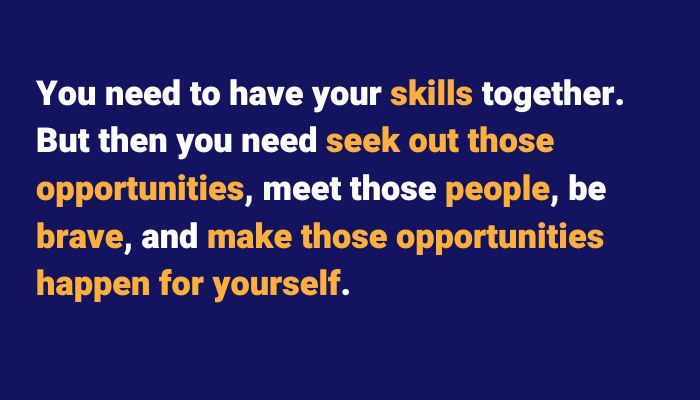
You need to have your skills together. But then you need to go out and seek out those opportunities, meet those people, be brave, and make those opportunities happen for yourself.
Because growing up in the eighties, every older musician I met was saying, “Oh man, the career- it’s dead. The industry is dead. It all happened in the 70s and it’s finished now”.
And every now and then I catch myself saying to a younger saxophone player, “Oh, it’s not the same as it was when I was younger”. But the reality is, I think there’s an abundance of opportunities. You’ve just got to go and find them. And you’ve got to take those opportunities when they come.
Because, in my life, the careers and the choices have changed based on what’s available. Who thought 25 or 30 years ago, that I’d be doing everything online now? Or that even earlier than that, I would be conducting a show on the West End stage? You know, I was just a saxophone player. Now, I’m conducting a show.
So, things change because the world’s changing. You’ve got to change with it and you’ve got to take those opportunities when they come.
Fred: Yeah, like I said, in a musical family. And my father was the president of the Musicians Union where I lived. So I was forced to join the union and go to these union meetings. They were right down the street from my house. So I really didn’t have much choice. And I would listen to these old guys. Every generation will complain that the younger kids are stealing our gigs.
These guys were talking about how the synthesizers are ruining the music business, you know, and the next thing is the drum machines are ruining it.And now it’s Spotify. You have to learn to adapt to what’s coming. And you have to keep yourself open to whatever opportunities.
The one rule has not changed. And that is you need to practice, you need to be prepared. Like they say, luck is what happens when preparation meets opportunity. The opportunity and the preparation, those things never change. You just have to be prepared for when it comes up. A hundred per cent.
Opportunities for young sax players
Nigel: I’m actually really optimistic about the opportunities for young saxophone players these days. Because yes, there are fewer gigs, in the traditional sense of going and playing in a big band or maybe even function band gigs. I’m sure there are more sax players with DJs than there are people actually in horn sections.
But guess what? They’ve got social media and they’ve got TikTok and Instagram and YouTube and all these ways to reach a massive audience. And not only that- you can create music now on your phone or on a laptop. You don’t need to spend tens of thousands of pounds in a recording studio and all that sort of stuff.
The opportunities are different, but they are plentiful. And I think that’s really exciting.
Fred: I agree. Yeah, absolutely.
Nigel: I feel like I’ve been talking about myself for way too long though, Fred.
Fred: That’s the idea. That’s why we’re here… Okay, I have one more question that’s kind of music sort of music-related.
Balancing Work and Life
Fred: How do you unplug? Because you are one of the busiest guys I know. You and Joel both. You guys are always working… I know you occasionally go and, take a trip and kind of unplug and go away. How difficult is that for you?
Nigel: Oh, it’s very difficult for me. Yeah. I find holidays very challenging, much to the anguish of my family. I like being busy. And I just figure you’ve go for it, right? Life’s all about making the most of every single day. I’ve always thought like that since I was young.
And so, yeah, I love work. I love working on a project. I love helping people and building a community around what we’re doing. That’s why I love doing Sax School Online so much, you know. Because now I get to hang out with you and Joel, and Matt and Dean and Chris, and all the other guys and Clair. We’ve got the whole team of us. We’ve got thousands of students that were helping as well. And, it is fun.
I get to surround myself with people that I find inspiring and we’re also making a difference in the world. So why would I spend lots of time not doing that? And I just enjoy it. Maybe one day I’ll slow down. Not yet, though.
Fred: I want to be you when I grow up. That’s what I want to be.
Nigel: Careful what you wish for, Fred!
Opportunities in England
Nigel: So that’s pretty much me. And I think the only thing I didn’t really talk about, if anybody’s still listening to this very long conversation, is the opportunities that came when I came to England were very different.
Because in the past I’d been playing in small bands. When I got to England, it was big bands. It was big band crazy in 2000 when I came to England. And all of a sudden there were these new opportunities of getting back to something that I did when I was 18, playing in big bands and touring around the country.
And it was interesting how that led to all of these other opportunities. While there are tours for big band players, then somebody needs to conduct the big band and then – Oh – now the big band is in a West End show and someone needs to organise that.
So I’ve always enjoyed moving on to the next step and the next step. Beause it keeps things more interesting, right? I’m not very good at doing the same thing over and over. But I love to find new ways to experience the thing that I’m doing.
And so that was a natural progression for me from going being the saxophone player in the band, to conducting it, to running the show.
Then eventually deciding that if I don’t spend more time at home, my wife and children will not recognise who I am. And that’s why I started doing the magazine and Sax School Online, which is where we are today. So yeah, it’s been quite an experience.
Advice from Nigel
Nigel: Well, there you go. See thank you for listening, everybody. It’s not very comfortable for me to talk about all the stuff that I do. But I will say this though.
So definitely the takeaways from today are:
- to be brave
- work on your skills
- and take opportunities when they come.
If I could go back and talk to my 15-year-old self, that’s 100 per cent what I would be saying. So I’m saying that to you if you’re listening.
And you know what, if you want some help finding how to develop your skills, and to be surrounded by people who can guide you and inspire you with your learning, then come and see what we’re doing at Sax School Online. Because I’m super proud of what we’ve done with Sax School over the last 10 years. It’s grown into this amazing place to learn.
And we do have a 14-day free trial where you can come and see how we’re helping thousands of people every day, get access to people like Fred and myself and all the rest of the tutors. And you can also connect with our Community. So go check it out at Saxschoolonline.com.