Apple Podcasts
 Podbean
 Spotify
 Amazon Music
 iHeartRadio
 Player.fm
 Podchaser
Coming Back To Saxophone After Years Away
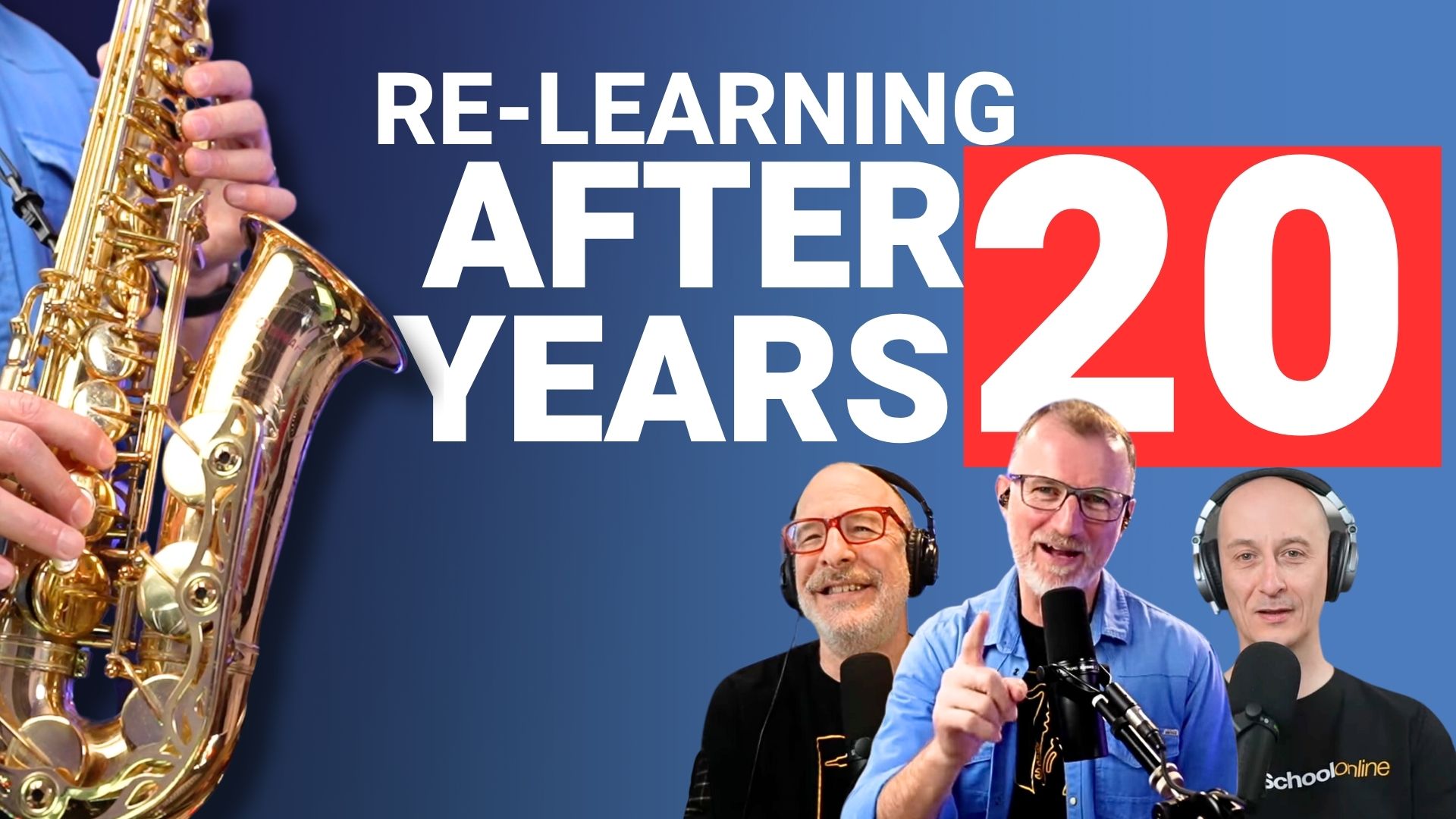
Can you really pick the saxophone back up after 20, 30 or even 40 years off? Yes, you can. It just takes patience, a beginner’s mindset, and some structure to guide you back.
Quick Takeaways
- Coming back after decades away is achievable, but expect it to take longer than you remember.
- Sax School builds every lesson around the CSI framework: core skills, songs, and improvising.
- Adults often learn faster in some ways because they already know what they want to sound like.
- Ditch the deadlines. Saxophone doesn’t work like a career.
14 day free trial(opens in new tab)
The harsh reality of coming back to saxophone
Let’s start with the honest bit. If you’ve had 20, 30 or 40 years off, getting back into playing saxophone as a mature adult is going to be a little bit more difficult than you remember.
We learn more slowly as we get older. Our muscles take longer to build back up, too. That’s just biology, not a reflection of your talent.
So patience matters. A lot. “You’ve gotta be patient with yourself, and it’s a good idea just to take things a little bit slower,” is how we put it on the podcast, and it’s true for every single returning player we’ve ever taught.
Why “I’ll be back on form in two weeks” never works
Here’s the trap a lot of returning players fall into. You think back to being the star alto player in high school. You tell yourself something like, “Give me two weeks, I’ll be back on form.”
Then you dig out your old mouthpiece, blow through a few tunes, and expect it all to click straight back into place. It won’t. That mindset is a recipe for disaster.
Your embouchure, your breath control, your muscle memory. They all need rebuilding, brick by brick. Rushing it just leads to frustration.
The CSI framework: how Sax School structures your comeback
This is exactly why we built our curriculum around something we call the CSI framework. CSI stands for core skills, songs, and improvising.
Every lesson touches on all three. You rebuild your fundamentals, apply them to real songs, and start improvising again, all at the same time, in a structured order.
It means you’re not guessing what to practise next. You’re systematically rebuilding your playing, your embouchure, and your confidence, one step at a time.

Ditch the deadlines. Saxophone isn’t like your career.
Most of our adult students had successful careers before they came back to saxophone. That’s actually part of the problem.
In a career, you learn to hit deadlines. You set up a new department, and two weeks later it’s running. Saxophone doesn’t work that way.
Students often ask us, “Exactly how long will it take me to play this and improvise over it? Are we talking two weeks, a month? Can you give me the date?” We can’t. Saxophone is a creative art. Nothing about it is ever truly finished.
Once players let go of the deadline mindset, everything gets more fun. There’s just a rolling, ongoing approach to getting better. No finish line to stress about.
The hidden advantage adults have over younger players
Here’s something that doesn’t get talked about enough. Adults coming back to saxophone actually have real advantages.
You already know what sounds good. You’ve been listening to music your whole life, so you know the sound you’re chasing, even if your fingers can’t quite get there yet.
One of our tutors went back to music school 25 years after leaving to join a band. He was the oldest person in every class, but because he knew exactly what he wanted to learn and how he learned best, he made the Dean’s List every single term.
Adults also don’t have the distractions kids have. No soccer practice, no homework competing for attention. You can focus purely on saxophone, which speeds up how quickly concepts click, even if your fingers still need time to catch up.
Why a beginner’s mindset changes everything
The players who enjoy their comeback the most are the ones who fully embrace being a beginner again.
You’re not building a career this time. You’re doing this purely for fun. That takes the pressure off completely.
You get to focus on exactly what you want to play, at your own pace, without worrying about auditions, gigs, or anyone else’s expectations. That’s a genuinely huge shift, and it’s why so many returning players end up enjoying saxophone more the second time around.

We’ve had students join us in their 50s, their 60s, even their 80s. One recently joined after a record deal back in the 1970s, and he’s now getting back into playing in his late 60s. Age has never been the barrier people assume it is.
FAQ
Is it hard to learn saxophone as an adult?
It’s not harder to learn, but it can take longer to rebuild than you expect, especially if you’re coming back after a long break. With patience and a structured practice routine, adults make great progress and often learn concepts faster than younger beginners.
How long does it take to get back into saxophone after years away?
There’s no fixed timeline, and that’s actually good news. Rather than chasing a deadline, focus on consistent practice using a structured framework like core skills, songs, and improvising, and progress will follow naturally.
Can I get back into saxophone after 20 or 30 years off?
Yes. Plenty of Sax School students return after 20, 30, or even 40 years away and go on to play confidently again. Some have even recorded albums or joined bands after starting their comeback from scratch.
Am I too old to start playing saxophone again?
No. Sax School has students in their 50s, 60s, and even 80s who are actively rebuilding or starting their saxophone skills. Age isn’t the barrier that most returning players assume it is(opens in new tab).
What’s the best way to start rebuilding my saxophone skills?
Start with a structured approach that covers core skills, songs, and improvising together, rather than randomly practising old tunes. This rebuilds your embouchure, breath control, and confidence in a systematic order.
Coming back to saxophone after years away(opens in new tab) is genuinely one of the most rewarding things you can do. Be patient with yourself, trust the process, and enjoy the journey instead of racing toward a deadline. You’ll get there, and you’ll have a lot of fun along the way.
If you want structure and support while you rebuild, come try Sax School and see how the CSI framework can guide your comeback.
14 day free trial(opens in new tab)
Nigel (opens in new tab)is the founder and host of Sax School Online, where he’s helped thousands of adult beginners and returning players build confidence on saxophone through structured, supportive lessons and a friendly online community.