Apple Podcasts
 Podbean
 Spotify
 Amazon Music
 iHeartRadio
 Player.fm
 Podchaser
Can you get a great saxophone these days for just a few hundred dollars per pounds online, and will it actually play well for you?
Today we’re talking affordable saxophones. I’m talking to Tim Zenderman from Jean Paul USA. They make fantastic, affordable saxophones. And actually, you’ll find out in this conversation how they are rethinking the whole industry for saxophones – how affordable they are, and how they’re helping to encourage more people to start playing saxophone.
So if you’re looking for your first saxophone, or maybe considering upgrading, then stick around, because I think you’ll find this conversation really interesting.
Just before we dig into the conversation, if you enjoy learning the saxophone and you love this podcast, could you do us a massive favour by just sharing it with one other person? Honestly, it would be so helpful to us and really make our day. Thanks a bunch. Okay, let’s get stuck in.
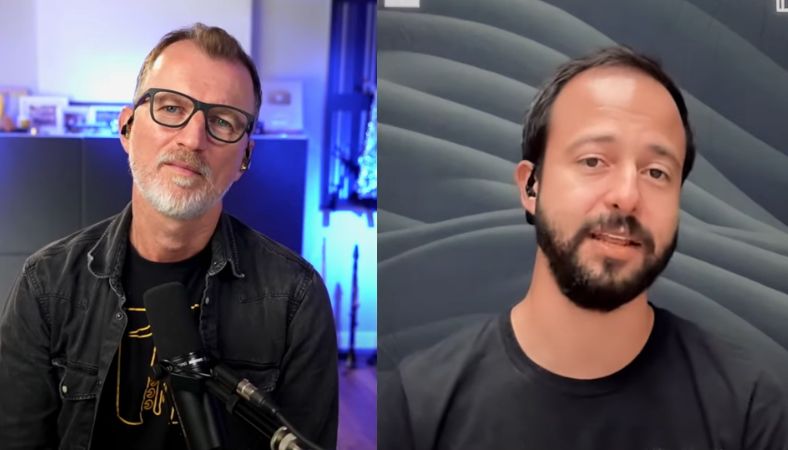

Meet Tim Zenderman
Nigel: Hey, Tim, it’s great to talk to you today. I’m a massive fan of your saxophones and loads of our members actually play Jean Paul saxes.
So I don’t know if you’ve been big supporters of us too, but this is what I wanted to dig into today. I see lots of members joining Sax School as brand-new saxophone players. So they’re really excited to start, but they don’t know anything about the process of buying a saxophone.
So the first place they go, of course, is eBay or Amazon. And they might be tempted by a really cheap instrument on Amazon. While there are some great cheaper instruments on Amazon, but there are also some problems. I mean, can you give us your view of what the pitfalls are when people do go to blindly to somewhere like Amazon, looking for their first saxophone in a lower price range?
Tim: Before I jump into that, we’re big fans of yours too, Nigel. We love everything that you do, so we’re happy to support in any way that we can.
Now when buying on eBay and Amazon, it’s critical to understand who you’re buying from. The seller matters much more than the actual instrument that you’re buying.

Check out the seller
You could buy a Yamaha student horn that has been mistreated for many years, and it’s then being resold on eBay. You might have to invest five, six, seven hundred dollars to bring it up to speed. Or you could buy the same instrument, from a seller who is sending the instrument in good condition. So looking at who is selling the instrument is vitally important.
N: I guess you’ve got that follow-up then if something goes wrong, right? Because I suppose a lot of people who are new to learning saxophone, aren’t really aware of what the technical hurdles might be with a saxophone. Because it’s not like a kettle or something. There are things that can go wrong with it, not only mechanically in using it, but also when it gets shipped to you. So that support network is really important, isn’t it?
T: Make sure that the seller has a warranty or some kind of promise that if anything happens during shipping, they’re going to take care of it. It’s critically important.
So we sell our instruments directly on our website, Amazon as well as eBay. And when things come up during shipping, we take care of it completely. We either replace the instrument or we if it’s a small adjustment that needs to be made, we ask them to go to a local repair shop, they make the adjustment, and we cover the cost. So, something similar to that, I think, is absolutely super important.
N: It’s peace of mind, isn’t it? That’s a really good point. And it’s not always something that’s obvious, though, when you’re buying on Amazon.
Buying new affordable saxophones
And the other thing that people are nervous about generally is buying a substandard, lower-priced instrument. Do you think that that’s just a bit of a hangover from years gone by? Because the standard of instruments coming from China these days is great, right?
T: So, that’s a great question. It’s a little bit both. As a brand-new player, you get an instrument, and if you can’t play something, you don’t know if it’s the instrument or if it’s you. And that can be a huge detractor from actually getting started. And it’s frustrating. So again, it’s even more important to be buying from a reputable company and somebody that’s going to support you. If you have any trouble getting started, you could reach out to them and say, ‘Hey, I’m not, I’m not able to play this note in tune’ or ‘this is sounding off. Can you help me?’
And so that’s absolutely fundamental. In terms of the quality coming out of China, it’s, it’s it’s a very big spectrum. And I think there is absolutely that hangover from years gone by. Twenty or thirty years ago. instruments coming out of China were not what they are today.
We carefully pick the partners that we work with in China. And the instruments that we manufacture there – especially our pro line – it’s fantastic.
You’ve got the instrument there.
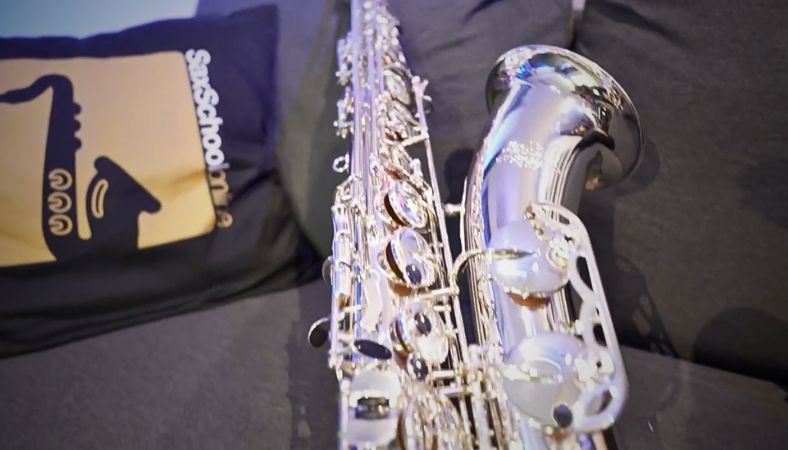
N: Yeah. I’ve actually got it right here. This is your tenor.

Hear the Jean Paul USA Pro Tenor
N: So that’s the Jean Paul TS 860. That’s their pro model tenor in a silver finish. What do you think of the sound?
Hey, just before we do get back to the conversation here’s reminder that if you want to improve your sax playing this year, remember to follow the podcast so you don’t miss any future episodes. And if you enjoy this episode too, maybe give us a five-star review. Honestly, if you’re feeling generous, it would really make our day. Thanks a bunch.
Okay, let’s get back to the episode.
N: I wanted to find out a bit more about what you guys are doing specifically as a brand. But one point before we get onto that, that I thought was interesting is I’ve seen quite a spectrum of quality of Chinese instruments.
Important of setting up a saxophone
N: The thing that concerns me the most is when I see a member who’s bought a saxophone and it’s come with white gloves in, and all the bits of cork still pinning it down. And it’s clearly just come out of a factory in China and been shipped directly to the person’s house.
And they get this thing and sometimes things are not working. They don’t know how to get it set up.
It’s a bit of a worry versus a well-set-up saxophone, which is a whole different thing entirely. So for somebody who doesn’t understand that process, what does it mean when a saxophone is set up between the factory and the customer?
T: The difference is night and day. So my Dad started Jean Paul Saxophones USA 13 years ago. And one of the first things that he realized, selling online, is the setup was a critical part of the success of Jean Paul. So early on, he started building a team of technicians here in Miami that inspects, sets up and play tests every single instrument before it ships out.

So you could have a $6,000 instrument and if it’s not set up, you will not be able to play it. You could have a $500 or $600 instrument that is well set up and a pro will sound like a pro sounds. Because the setup makes all the difference.
N: Yeah, and for anybody who’s not aware, there’s a lot of different things in that setup. It’s making sure that all the adjustments are correct and the heights of the corks. And even simple things like making sure your mouthpiece is going to fit well. And checking there’s not been any issue with shipping that’s caused a problem – something not been knocked around or anything.
How Jean Paul saxophones are setup
I think it makes a massive difference. And I have to say that when you guys sent me over this tenor, one of your technicians made me a little video and showed me them playing it and just talked me through the saxophone. You know, “so this is your saxophone, this is what it sounds like.” And then they shipped it off, and it arrived in fantastic playing order, actually.
And I thought, it’s a bit like buying a fancy car or something. It just gives you that good feeling of confidence that you’re getting something that’s great. And I don’t know if you do that with all of your saxophones, but I appreciated that when you sent me this pro saxophone. Was that something you did special for me, or was that something you do for all your customers?
T: So this is something we started doing about a year and a half ago. And we do for all pro instruments that we send to everybody, and we do it as a surprise. We don’t advertise it right now. I think it’s a really special touch. I would love to be able to do it for everybody that buys – even the student and intermediate series. But we’ve got to improve some processes so that it’s scalable and we can actually put that video together for everybody. But yeah, we do, we send it to everybody.
Who are Jean Paul USA
N: Ah, cool. I love it. So let’s just have a chat about your background. So you and your Dad and the rest of the company, that’s Jean Paul USA.
And as a brand, it’s something that’s quite familiar to me. I’ve seen you guys with your saxophones on Amazon and eBay for quite a while. And like I said, a lot of our members have them. I’ve got a couple of kicking around here that you’ve sent me that I’ve had a play around with, and actually been really pleasantly surprised.
I think they’re great. What’s most amazing to me is the price point. Because your starter student altos are about $600 and your tenors about $900, something like that. So you offer affordable saxophones for people starting out.
Affordable saxophones
And then the pro models are about $1,500, and $2,200 for the tenor. So that’s definitely on the affordable range for a student instrument. And they are quite a lot cheaper than the main brand pro-level saxophones.
So these are quite affordable saxophones. So just talk me through the process of how you guys got set up and what was the logic behind what you’re doing.
T: My Dad had a distribution company that he started 35 years ago, and they’ve been distributors for big brands like Yamaha. And eventually, I think in the early 2000s, they were the biggest distributor of Yamaha instruments in Latin America.
So, they were very familiar with the entire catalogue and all the instruments.
The Jean Paul USA story
T: On a business trip down to Central America, and he was in the reception area, waiting for a cab to come. He was listening to a duo playing a piano and saxophone.
And when the saxophonist finished playing, he went up to him, he saw that he had a Yamaha. He congratulated him on how well he had played and said, ‘I see that you have a Yamaha saxophone. I’m actually the distributor, so thank you. You have a beautiful instrument’.
And the saxophone player said, ‘Thank you, but this instrument is not mine. I get it lent to me from the conservatory so that I can make a living.’

So my Dad said, ‘How is it possible that you make your living playing this thing and you can’t own it?’ I mean, it’s already hard enough and it takes years and years of learning and practice to become an expert. How could it be that the tool that you need, you can’t afford, right?
So that kind of stuck with him. He got back to the States and in different conversations, he found that it was a similar situation. So many families were struggling with the same thing, right? Kids coming home – here in the U.S., playing saxophone in the band is a big thing.
So it’s not uncommon for your 10-year-old to come home and say, ‘Hey Mom, Dad, I want to learn the saxophone. Here’s a list of the recommended instruments that my band teacher told me I should buy.’ And they’re $1,200, $1,500, $1,800. So [Mom and Dad say] ‘Son, just go and play soccer. We’ll keep the saxophone for another day.’ And it sucks. It’s sad.
My Dad’s got tons of stories of kids that almost didn’t get into music because their parents were pushing them away. And they ended up becoming incredibly talented musicians who went on to Berklee and other music schools here in the U S., and just became really talented musicians. But they were this close to not playing music at all because of how costly it was.
Making saxophones affordable
So this didn’t sit right with my Dad. When an opportunity came up, he went to China. He started investigating different factories, having different saxophones tried out here in Miami with different technicians and musicians. Until he landed on the AS 400, which is our student line Alto.
And so we started working with that horn. And we grew the line to include clarinet, flute, and trumpet. We always focused on a team of technicians setting up and play testing every horn before it ships out.
N: Yeah. Fantastic. So you really, you’re kind of like democratizing the whole thing of saxophone or instrument purchase, aren’t you? You’re making it affordable, but also a good quality saxophone at an affordable price, which I think is really cool.
And I love that you are opening up the doors to more people, more families, to be able to get started. Because at the end of the day, if more people aren’t learning saxophone, then where’s the future of saxophone going to be, 20 years down the track?
T: Our slogan is Wind instruments for the People. But there’s one more thing that I want to point out here that I think is very relevant to what you do, and incredibly important.
The right teaching on sax
So, we pass on the savings. We take out all the middlemen – the retailers and the distributors – so that the people that want to play and the kids that want to start playing the saxophone, can. Because the hardest part about learning music is not the actual instrument. The instrument should just not get in your way. But the hardest part is actually putting in the time and the education. So if you spend less on the saxophone, that means that you have more resources to spend on education, which is actually the most important thing to learn.

So having the right teacher, having the right plan, having the right infrastructure for learning. We see that as just as important, or more, than having the right instrument.
N: I love that. That’s fantastic. It makes perfectly good sense to me. And even better when you can do it at a price point that people can get, so they are affordable saxophones as well as being good quality. Yeah, that’s fantastic.
Intermediate Model Line
N: So we mentioned that you’ve got the AS400 and you’ve got a pro model line. Is there an intermediate as well?
T: For the alto – not yet, but it is in the works. We do have a tenor intermediate right now, that has been around for less than a year. We’re making some improvements on that horn, now as well that should hopefully be out before the end of the year.
N: Cool. And soprano and baritone as well?
T: We have a soprano. But we only we have the pro soprano, which is our straight soprano. It’s a fantastic horn. You haven’t tried that horn out yet, have you?

N: No, I have one. You’ve sent me one actually. I feel like I’ve got all of your saxophones, Tim. What’s going on? I feel like I’m the UK branch for Jean Paul!
T: Yeah, So you have the complete pro series, right? You have the alto, tenor and soprano.
N: I think I do – the alto, the soprano and the tenor. Yeah. You haven’t sent me the bari sax yet. So I’m just joking, just joking.
T: It’s going to cost an arm and a leg to ship!

Quality in affordable saxophones
N: Yeah, absolutely. But I’m really impressed with all of them. I like that soprano. And in fact, when the other saxophone guys have been here, they’ve been amazed with it as well. It’s a really surprising instrument for the price.
Actually, I think soprano is one of those saxophones that it’s difficult to do a lower-cost one well. Because everything’s smaller, it’s got to be more accurate, and sometimes they can be quite out of tune. Yours plays great.
Production Quality
T: Yep. Absolutely. I agree wholeheartedly with you. But it goes back to what we were talking about before about the quality of instruments coming out of China, right? Thirty or forty years ago they said the same thing about Yamaha and Japanese manufacturing. So things have changed.
N: I hadn’t thought about that.
Because these days everybody expects a Japanese instrument to be really well-made and they are great. I mean, Yamahas, Yanigasawas, they are fantastic. But people have that mindset straight away that of course, they’re well made because they’re from Japan.
T: Yeah, absolutely. But it wasn’t always that way, right? There was a time when the best instruments in the world were coming out of France and only France, or the US. So, when did Yamaha start making saxophones? Was that in the sixties?
N: That’s a great question. I don’t know. I’ve got a Yamaha 62 over there, which I bought in, like, 1987 and it was quite established then. That’d be something interesting to find out actually.
T: Yeah. I’ve talked to older saxophonists and they’ve talked to me about this. How could this company that manufactures motorcycles, or boat engines and also be manufacturing saxophones?
N: It’s about production quality.

T: Yeah, exactly.
N: Yeah, that’s right. It’s about processes. I’ve spoken to other people who’ve been involved with the instrument manufacturing industry in China. You talked about how the instruments got so much better. And other people have told me how the factories where they were making the instruments used to be really basic. They weren’t like a car factory. They were more like a cow shed. And so everything’s getting better, I suppose – the processes, the conditions and the craftsmanship. So I guess that’s just evolution.
Future plans for Jean Paul USA
N: So what’s the plan for Jean Paul USA then? I know you guys are getting more and more visible over here in the UK. Do you have plans on how you’re going to expand and reach more people?
T: Yeah, so our lineup is still growing. We’ve got to fill in some of the intermediate horns. There’s the tenor that we have now, but we’re making some improvements to. And the alto that will hopefully be released before the end of the year.
We want to bring on to the bari sax, which we didn’t get to finish talking about. I’d love for you to try it out, when we have it ready.
So we had the BS 600. That was an intermediate bari that we carried a few years ago, but it was discontinued. And we’re now working on a new bari sax, because we get asked about that every day.
N: Do you? Is there a lot of demand for bari sax? That’s interesting.
T: Absolutely. Especially for, might I add, an affordable bari sax.
N: An affordable, good bari sax.
T: Correct. An affordable, good bari sax.
N: Yeah. You’ve got a unicorn there, if you can create that.

Developing affordable saxophones
N: I’m curious – when you say that you’re developing a bari sax, what does that process look like? Are you actually talking with the factories and working through things? Tell me how that works.
T: Yeah. So we have a product development team here in Miami. We work with the factories. Well, we started feeling out at different factories in China, until we pick the factory that we want to work with. And then we iterate on the design and we make changes to the instrument, until we get to the instrument that we love, and that we think is the perfect instrument for that price point and that level of horn. What that means is, it depends on whether it’s a student, intermediate or pro-level horn that we’re looking to build.
N: So there are lots of variables in there, I suppose, isn’t there? Obviously, there are things we all see when we’re shopping for a saxophone. The finish, I suppose – is it in a gold lacquer or is it in silver?
But there are fundamental things, about the material that the body’s made from, the style of the key work, even things like pads and springs, I suppose, right?
T: All of that. Yeah. So the finish is kind of the final detail. But a lot of other things have to check out before that. And everything that you mentioned – the quality of the pads, the key work, the springs, the silencing mechanisms.
N: Even the case, right?
T: Yeah. The carrying cases that we send our instruments with are especially for the student horn, … has an ABS shell on the outside. So it’s really really solid.
But going back to the development of the instrument, it’s not even just about what you see, like the keywork, the pads. It’s, it’s even on the inside of the horn. The finish of the rods, the pivot screws. There are lots of moving parts inside the horn that we make iterations upon as well.

Important of after-sales support
N: Right. Interesting. Yeah. I love to hear that because at the start of the conversation, we were talking about that quandary of looking at a lower-priced saxophone and not understanding the difference from one to another when you’re purely looking at – ‘What colour is it? How much does it cost? ‘
There’s so much more involved in the way the instruments are prepared. They come from the factory, they are prepared by the company that’s selling them, before they come to you. And then the support that you have afterwards with that instrument. And from our point of view, as educators, when we’re helping thousands of people, it’s really important. So I’ll have a student that comes to me and says, ‘well, I bought this saxophone and I don’t think these notes work. I can’t get that note out that you’re telling me to play’.
And when you hear it, it’s obvious that it’s a mechanical issue. So I’ll say ‘Well, okay, can you go back to where you bought it from? And can they help you? Can you get it repaired?’ And without that support and that back-up, then it’s very difficult.
And it’s like you were talking about before, where people are put off starting an instrument because they can’t afford a saxophone. Well, that’s another big hurdle that stops people’s progress. Because they finally got the saxophone, they’re so excited and then they hit a roadblock because the instrument may have a technical issue, and they can’t get it resolved easily.
So getting through those first hurdles is so important to keep people’s progress going. And then the ones that do -you’re flying then, aren’t you?
Where to find out more
So that’s amazing. It’s so nice to talk to you about this. And if people want to find out more about Jean Paul, where else can they find out about you guys?
T: Awesome. They can follow us on Instagram @jeanpaulwinds. And our website is JeanPaulUSA.com.
And I just want to add one more thing to what you were talking about. I think, you know, all of that is critically important. And trust, I think, is the word that is just so important to buying anything. Especially with something like a saxophone that so many people need to play before they decide on it.

So if you’re buying an instrument like a saxophone without having played it before, or having touched it, or seen it, trust is critically important. And seeing what other people say and other people’s experiences. That is one of the most important things in deciding whether you want to buy it or not.
N: Yeah, absolutely. I’ve made some videos of your Jean Paul saxophones. But there are other people talking about them too. And there’s a reason why there’s good feedback, because the saxophones are actually really, really good.

Your saxophone journey
So I hope if you are interested in looking for a beginner saxophone, you’ll look at the Jean Paul range. Or , I think of the pro level range as the first upgrade saxophone that people would look at.
Maybe somebody starts their journey with something like your AS400 as their first starter saxophone. And in fact, I’ve got members who live in a few places, and they have a few saxophones. So they’ll have their main saxophone, and then they’ll have maybe like one of your AS400s in their holiday house, or that they take with them when they’re travelling with work.
So that’s often a starting point. But then I see people a year or 18 months down the track, maybe ready to upgrade. And that’s where I think those pro saxes really are a good option because they’re affordable saxophones, but they are a big step up from the student instrument. So whatever you’re looking for in your journey, I hope you check out Jean Paul.
And Tim, thanks so much for having a chat with us today.
Hey, I really hope you found that interesting. Don’t forget there are new episodes coming out all the time, so don’t forget to follow us so you don’t miss out on future episodes. But most importantly, keep practising hard and we’ll catch you next time.
Find out more about Jean Paul saxophones here
If you’re looking for great lessons, tutor support and resources to supercharge your saxophone progress, check out Sax School Online. Start today, free for 14 days, here.