Apple Podcasts
 Podbean
 Spotify
 Amazon Music
 iHeartRadio
 Player.fm
 Podchaser
If you were starting your saxophone journey today, would you take the same path? In this episode of the Sax School Online Podcast, seasoned pros Nigel, Joel, and Fred reflect on how they would do things differently in 2025 – from choosing styles to mastering new ways of learning and building a thriving career in today’s digital world.
Discover valuable insights from the Sax School Online Podcast, where seasoned saxophone pros Nigel, Joel Purnell, and Fred Vigdor share their reflections on starting a saxophone career in today’s world. If you’re an aspiring musician or simply looking to enhance your playing, this post dives into how approaches to style, learning, and building a career have evolved.
Finding Your Style: What Would They Play Today?
In today’s diverse music landscape, how do professional saxophonists choose a style? Nigel, Joel, and Fred reflected on their personal journeys and what might inspire them if they were starting afresh in 2025.
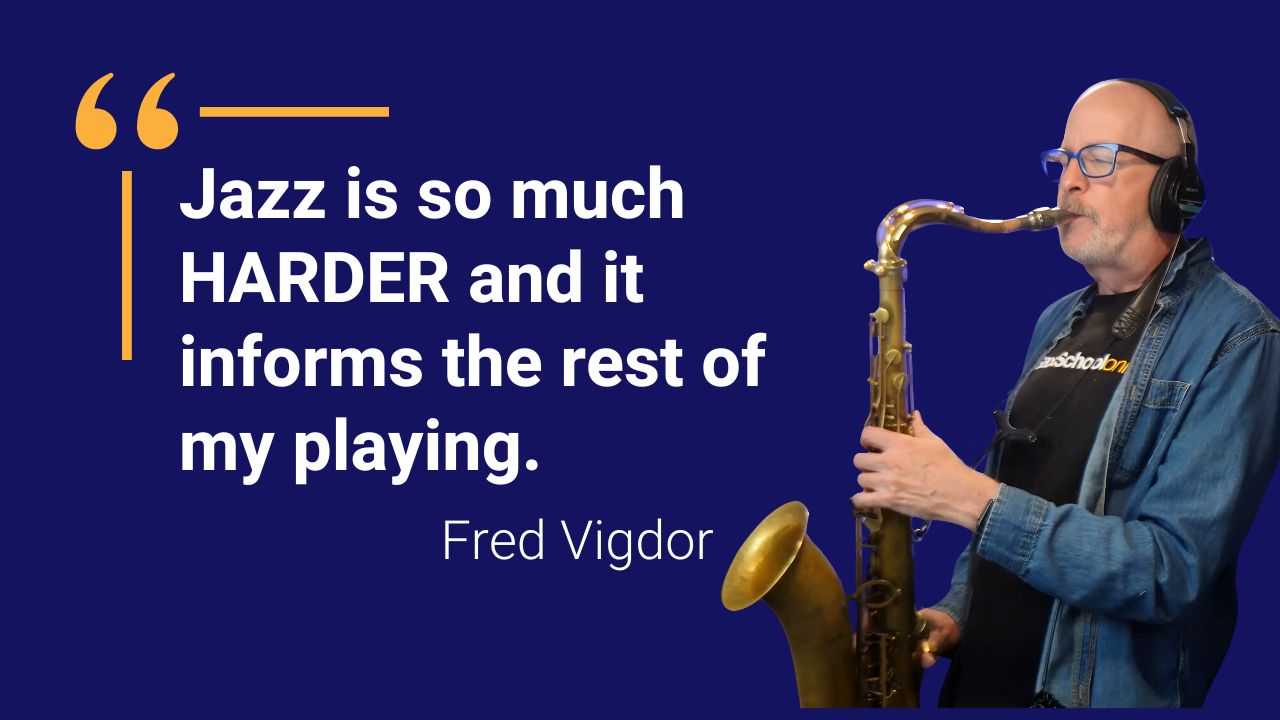
Fred Vigdor: Known for his funk and commercial playing from his decades touring with the legendary Average White Band, Fred admits he never actually practised funk. instead he dedicated most of his study time to jazz and bebop. “Jazz is so much harder, and it informs the rest of my playing,” he says. Early in his career, he was drawn to saxophonists like David Sanborn and Tom Scott, but his introduction to Charlie Parker came much later. He believes that if he were starting today, he would spend even more time digging into bebop, given its role as the foundation of many contemporary styles. Despite his reputation in funk, he insists that his love for jazz deeply influences his playing, and he wishes he had started studying it even earlier.
Joel Purnell: Joel’s passion lies with jazz and Latin music, but if he were starting over, he would explore Indian improvisation. “It’s a lifetime’s work, but the idea of a four-hour improvisation sounds like bliss to me,” he shares. Joel discovered Brecker later in his musical journey, and by that time, he had already developed a solid grounding in jazz fundamentals. He reflects on how he would approach learning differently today, noting that the complexity of Indian improvisation, with its intricate rhythms and ragas, offers a fascinating challenge. While he still studies aspects of Indian music, he acknowledges that fully mastering it requires total commitment from an early stage—something he wishes he had pursued when he was younger.
Nigel: Nigel reflects on reaching broader audiences with styles like “DJ sax” or Jazz House. He recognises that today’s young musicians rarely see saxophonists in traditional jazz settings, and he sees an opportunity to bridge that gap. “Younger generations mainly see saxophones in modern styles, so I’d aim to bridge that gap and connect with a wider audience,” he adds. He believes that while traditional jazz will always have a place, embracing more contemporary genres could introduce the instrument to a new generation of listeners.
Sax School Takeaways:
- Jazz and bebop remain foundational for any saxophonist.
- Exploring lesser-known genres like Indian improvisation can enrich your musicality.
- Consider styles that resonate with today’s audiences, like DJ sax or house jazz.
Approaching Practice and Learning in 2025
The way musicians learn has transformed dramatically with online tools, communities, and resources. The tutors reflect on their learning paths and what they’d change today.
Fred Vigdor: “I’ve never practised for eight hours straight in my life,” Fred admits. While his career took off through gigging, he regrets not focusing on fundamentals like saxophone warm-ups earlier. “I wish I’d spent more time on tone production and tuning when I was younger.” Looking back, he realises that structured practice would have made a significant difference in his development. He also recalls how difficult it was to access backing tracks and learning resources when he was younger, compared to today’s vast online opportunities.
Joel Purnell: He emphasises the basics: “I wish I’d focused more on long tones and warm-ups early on. These foundations are crucial.” Joel recalls how he spent hours transcribing complex solos early on, often neglecting fundamental tone development. He now understands that a well-developed sound is just as important as technical ability. Given today’s access to high-quality online instruction, he believes new players have the advantage of learning core skills much faster than he did.
Nigel: Nigel suggests balancing practice with practical experience. “I think I wasted too much time practising. Getting out and gigging teaches you faster.” He acknowledges that while practice is essential, nothing replaces the experience of playing in real-world settings. He encourages students to seek out performance opportunities like playing saxophone on tour as soon as possible, rather than waiting until they feel “ready.”
Sax School Takeaways:
- Prioritise basics like tone production and tuning.
- Use today’s online communities and resources for structured learning.
- Balance practice with live performance to grow faster.

Building a Saxophone Career in 2025
Starting a music career today offers both challenges and opportunities. Social media and digital tools now play a crucial role.
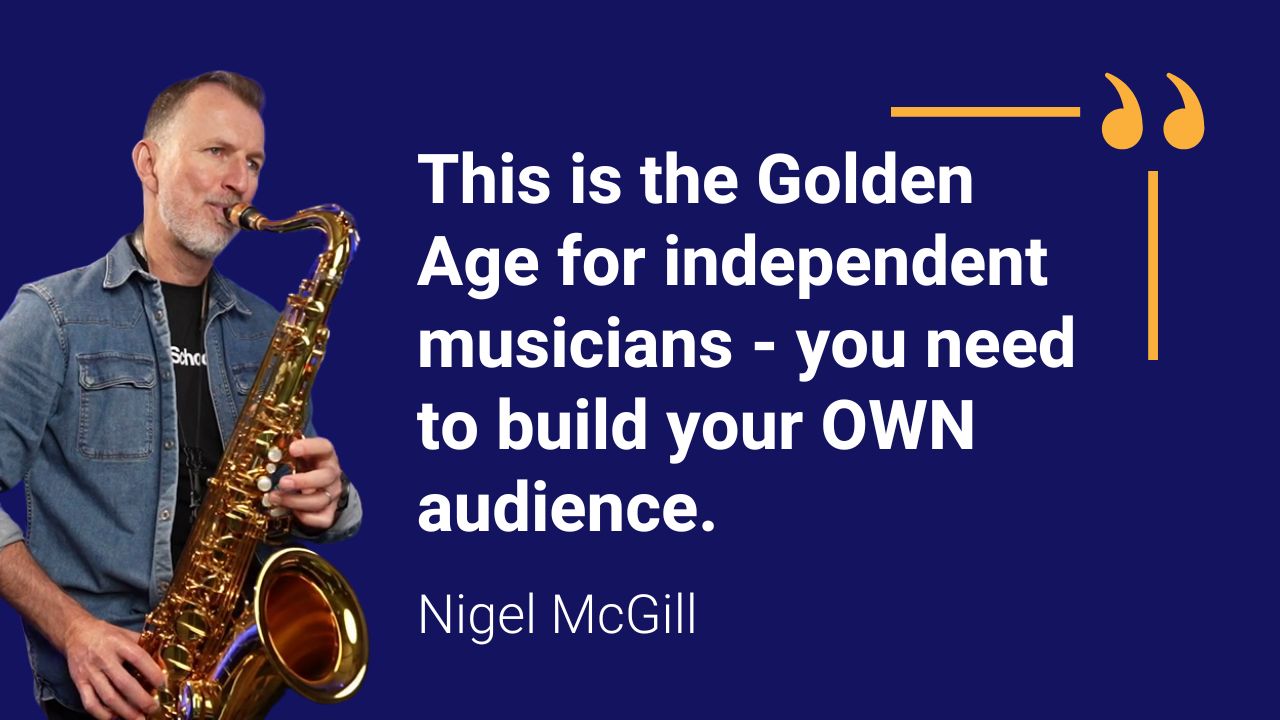
Nigel: “If I were starting out today, I’d focus on building my audience through social media. It’s a golden age for independent musicians.” He believes that the traditional path of relying on record labels and gatekeepers is fading. Instead, musicians today have the power to connect directly with audiences and create their own opportunities.
Joel Purnell: He acknowledges the importance of social media but warns against its distractions. “Find someone who loves managing social media to help you focus on your music,” he suggests. He notes that while online presence is critical, spending too much time on marketing can take away from actual playing and development. His advice? Strike a balance.
Fred Vigdor: Fred highlights the overwhelming nature of today’s career-building demands. “I’m glad I grew up before social media took over. It’s a full-time job on its own.” While he sees the advantages, he recognises that young musicians now face new pressures that didn’t exist in his early career.
Sax School Takeaways:
- Build your social media presence to connect directly with audiences.
- Use online platforms to create opportunities beyond geographical limits.
- Don’t overlook stagecraft and audience engagement.
Final Thoughts
Whether it’s rediscovering a style, refining your practice routine, or navigating today’s music industry, the wisdom shared by Nigel, Joel, and Fred offers valuable lessons for any saxophonist. The journey might look different today, but the passion and dedication remain the same.
Ready to make faster progress with your saxophone playing? Start your 14 day free access today and explore thousands of lessons and courses to help you play the music you love on your saxophone.
Watch the full episode on youtube here: