Apple Podcasts
 Podbean
 Spotify
 Amazon Music
 iHeartRadio
 Player.fm
 Podchaser
There’s nothing worse than a squeak when you’re learning saxophone!
For adult learners squeaks are extra frustrating. But don’t worry because today you’ll learn Five reasons why your saxophone is squeaking, and most importantly, then, you’ll understand how to fix it so you can get rid of that squeak in your saxophone playing forever.
By the way, number five is a pretty cool tip you may not have thought of if you’re an adult learner, so stick around for that one.
Let’s start by talking about tip number one and what’s actually going on in that first example that I played for you.
All right, let’s talk about number one.
Your bottom teeth
Now this is truly a horrible sound, but there’s a very, very simple reason What’s actually happening here is your bottom teeth are touching the reed.
Now, when we first start out learning, it’s easy to be uncertain about what’s going on with your embouchure, and if we don’t get our mouth quite right, it’s very easy for our bottom teeth to touch the reed. When that happens, though, we get a horrible, horrible squeak. So how do we fix this? Well, it’s dead easy.
Now, it’s challenging when you’re first starting out on saxophone because there’s so much to think about, but it’s essential that you take your time and get your embouchure right. set exactly right every single time you play. So that means forming a little cushion for your lip for the reed to sit on. So the cushion with your lip can be formed by making the sound “Voo”.

And if you do that, it does a couple of things. It makes a little natural round shape in your mouth, and it also bunches up your bottom lip, and the top fleshy part of your lip generally just folds over the top of your teeth just a little bit. That’s a brilliant cushion for the reed though. It lets the reed vibrate, and it lets you get a wonderful big sound.
Too much mouthpiece
Now when you’re getting started on saxophone, it’s tempting to think that more mouthpiece is going to give you a bigger sound, right? But actually, it doesn’t work like that. And a common mistake that a lot of adult learners make is they use too much mouthpiece when they’re playing.
Now, to get a really beautiful sound on your saxophone, you really need to think about how much mouthpiece you have in your mouth. And there’s a point that is just right. And that’s generally just at the point where the reed comes away from the mouthpiece. So, if you notice, your mouthpiece curves up and your reed is straight.
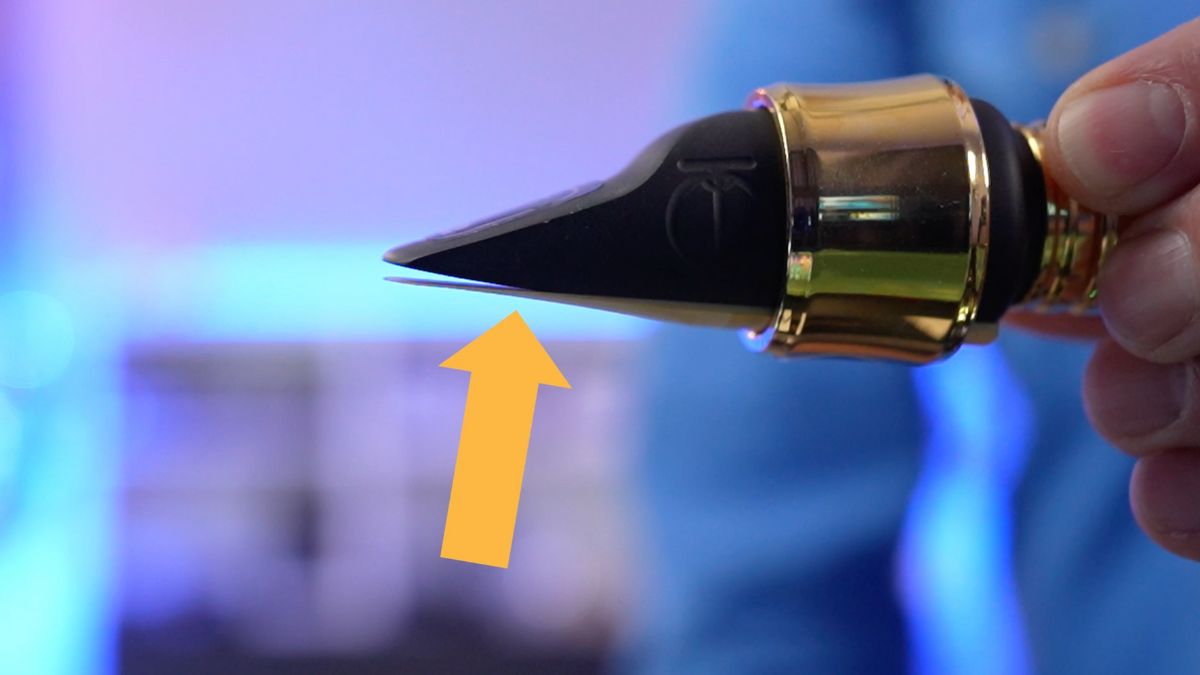
And the point where the two Separate, that’s really where you should have your lip. Now if you have too much mouthpiece in your mouth, well you’re not really supporting the read at all. It vibrates really crazy and that’s when you get a horrible harsh sound and probably some of those squeaks. So the best way to get around this is to experiment by using just a little bit less mouthpiece.
mouthpiece in your mouth to see if that makes the sound better for you.
Now it’s really important to not go too far and use too little mouthpiece, so it’s a bit of a Goldilocks thing. Not too little, not too much, in the middle is just right.

Just before we get on to tip number three, I’ve got some great resources for you if you’d like to get some help starting saxophone right from the start.
We’ve got a free saxophone toolkit and inside you’re gonna find Five killer lessons that will get you playing fast, get you enjoying playing lovely melodies, and also give you some cool resources to warm up on. It’s completely free. Click below to get instant access.
Your Fingers
An often overlooked cause of squeaky notes is actually our fingers. Now, there’s a lot to think about when you’re learning saxophone, and if you’re coming to saxophone (or just starting) a bit later in life, it’s easy to forget that our ring fingers aren’t very coordinated.
So, a common cause of squeaking is when we actually haven’t got our fingers pressed all the way down on the keys. This is really common with the note G, and also with our D finger.
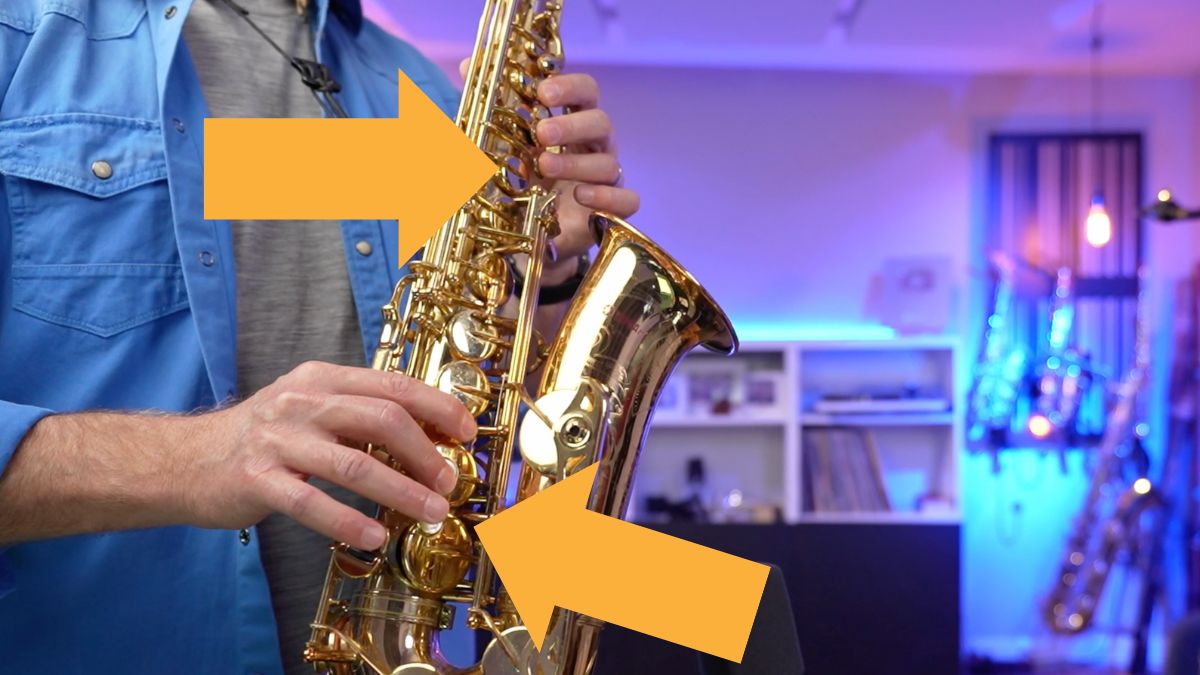
How do we fix this?
Well, there’s a simple answer. Grab yourself a mirror and practice in front of a mirror when you’re playing, particularly if you’re struggling with some squeaks. See what’s happening with those fingers. So make sure that the fingers are going all the way down when you’re playing.
Bonus Finger Tips
1: Hand shape: First of all, it’s really important that you have a relaxed, curved shape in your hand, kind of like an open C. Imagine that you are grabbing a big bottle of water. Well, that’s the shape your hand should be on the saxophone.
2: “No play” Practice: And the second tip is, try doing some practice on your saxophone without even playing.
Literally just holding your saxophone and pressing down the keys, but taking the time, while you’re not thinking about your mouth, to actually watch your fingers and make sure that those fingers are pressing all the way down in a positive motion.
Blowing too hard?
Now depending on where you’re practicing your saxophone, you might find that you’re playing really quietly, or you might find that you’re playing really loudly. Quite common, particularly for adult learners, we can fall into the trap of just using too much air to try and get that great big sound on our saxophones, right?
The problem is, using a lot of air is great, and it’s going to get a big sound, but if our embouchure isn’t yet strong enough to support that mouthpiece, we can really lose control of the reed. That’s when often get a horrible edgy sound, and often quite a lot of squeaks.
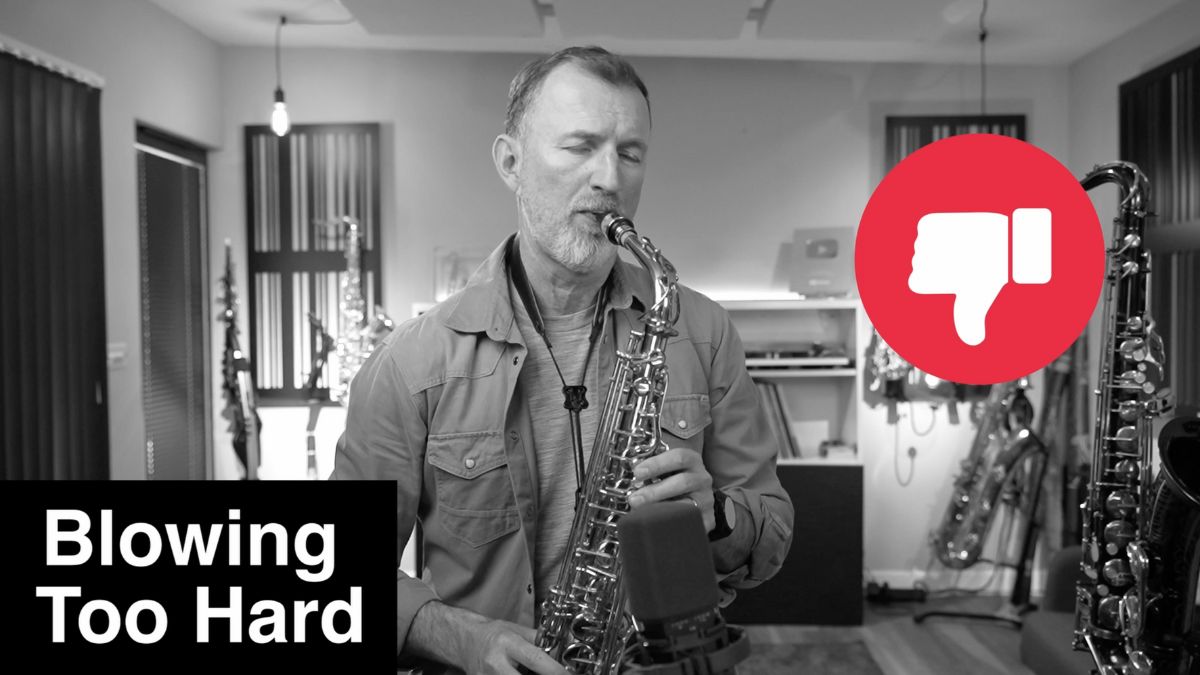
So take your time building up to playing loud. I think, just like it’s important to not spend too long playing too soft, it’s also a good idea to not play too loud at the start either. I always say to our students at sax school, the most important thing you can do It’s just to spend as much time as possible playing beautiful melodies.
The best way to build tone
So, that’s why we really encourage our, uh, members to dive into our starter pathway in sax school, which is packed with beautiful melodies that are just plain fun to play. And it gives you a chance to build up this embouchure without being too loud, without being too soft, but just building up your confidence and your strength.
And that leads to a really lovely sound. in the shortest amount of time possible.
Now, just before we get on to tip number five, don’t forget to grab that free toolkit lesson bundle. I know it’s really going to help you. The link is down below. It’s completely free. I just want to help you get started with the right resources that are going to really make the biggest difference to you.
What about your reed?
Okay, let’s dig into number five. Now, I mentioned that lots of adults don’t think about this problem, and it’s easily overlooked. Obviously, there’s a lot to think about when you’re starting off on saxophone, and the reed is something that causes lots of problems, but most people just don’t know enough about or don’t think to check.
So, with your reed, first of all, I definitely suggest beginners use a cane reed. I use synthetic reeds, these are by Legere, and these are great if you’re more experienced, but if you’re just starting out, stick with cane until you know what size reed is right for you. And speaking of sizes, I’d suggest a size 1. 5 or a size 2 to get started with.
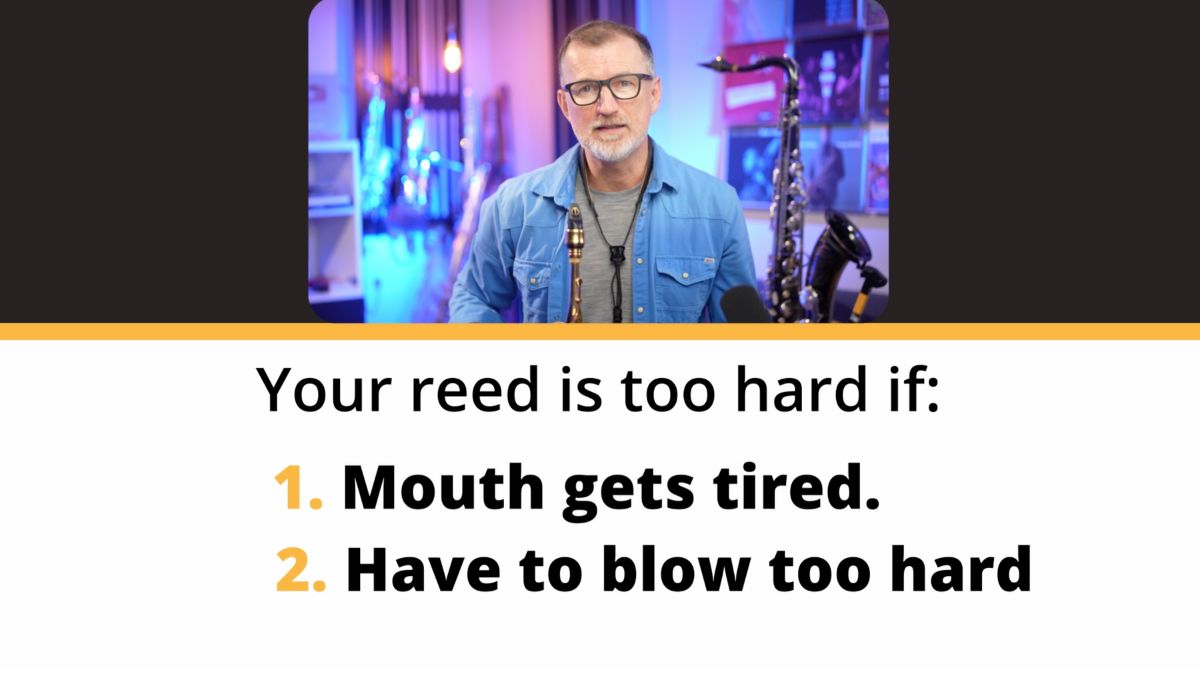
If you’re using a harder reed than that, maybe a 2. 5 or even a 3, you could find that that’s causing a lot of squeaks as well. And you’ll know, apart from the size on the reed that’s printed on it, you’ll also know if your mouth is getting super, super tired, Or, if you’re having to blow really hard, but you’re hardly getting any sound out of your saxophone. These are all indications that your reed is too hard.
And by the way, reeds are not perfect, right? Sometimes they just warp, they go out of shape, and they don’t seal on the mouthpiece. And you can always check to see if it’s sealing on the mouthpiece, once you’ve got your mouthpiece all together, by simply putting the bottom of the mouthpiece against your hand, and then sucking the air out.
Hopefully you get a little pop sound and that tells you the reed’s making a good seal.
If you’re not getting a good popping sound, then definitely swap your reed out for a new one.
One final reed tip…
And one final tip on this as well is if you’ve got any damage at all to the tip of your reed, maybe a chip or a crack, definitely swap that reed out so you’ve got the best chance of having the best sound on your saxophone.
A bonus tip for you
Now I’ve got a bonus tip for you, and this is really important, particularly if you’re an adult learner. Like I mentioned to you earlier, actually, the best thing you can focus on at the start here is spending as much time as possible playing through beautiful melodies. Nice, slow melodies are going to pull all of your skills together.
And help you to build your embouchure strength up as fast as possible. And that’s going to help you to make the best progress and keep that momentum going as you’re learning saxophone. Now tell me in a comment down below which of these five things has been affecting your playing. And let me know if it’s helped you as well.