Apple Podcasts
 Podbean
 Spotify
 Amazon Music
 iHeartRadio
 Player.fm
 Podchaser
Do you struggle to learn your scales or remember all the accidentals while learning saxophone? You’re not alone!
In this guide, we’ll explore a technique that simplifies scale learning, helping you play more fluently without overthinking. This method is perfect for beginner saxophone players and those looking to advance their skills with structured saxophone lessons. Plus, stick around to discover free resources from Sax School Online that will supercharge your practice.
The Challenges of Learning Scales
When you first begin learning saxophone, the focus is usually on simpler scales like C Major, G Major, and F Major—scales with only a few accidentals. However, as you progress to more advanced scales like B Major, E Major, or C# Major, the number of accidentals can feel overwhelming.
“There are a lot of accidentals we feel we need to memorize, but you don’t have to!”
This blog will introduce a method that helps you bypass this mental overload, making it easier to learn how to play saxophone scales fluently.
The Analytical Mindset in Learning Saxophone
It’s often said that learning saxophone gets harder with age, but that’s not necessarily true. Adults approach learning with an analytical mindset. For instance, a child might play an E♭ Major scale without question, but an adult might ask, “Why is it called E♭ Major? What makes a scale major?”
While curiosity is a strength, over-analyzing can slow down your progress. Consider this example:
“I had a student who spent weeks learning the theory behind the D Major scale. When we finally shifted focus to motor actions instead, her progress skyrocketed.”
Practical Lesson: Right-Hand Technique for Saxophone Players
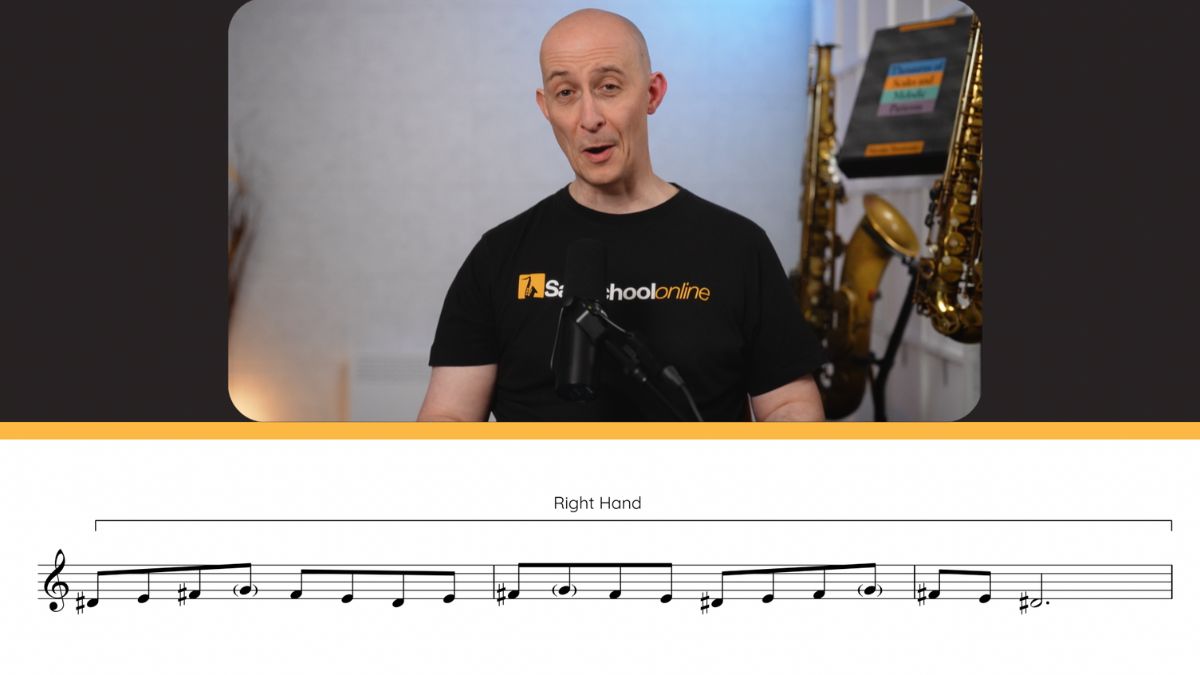
Start by practicing a simple set of notes: D♯, A♯, E, F♯, and G.
- Play these notes repeatedly, focusing on the shape your fingers form.
- Look away from the music and keep practicing until the motion feels natural—almost automatic.
- As you do this, your fingers will develop “muscle memory” for this particular shape.
Quote: “You’re not thinking about notes anymore—it’s just a shape on the saxophone.”
This practical approach simplifies learning saxophone scales, making it less about theory and more about feel.
Practical Lesson: Left-Hand Technique for Beginners
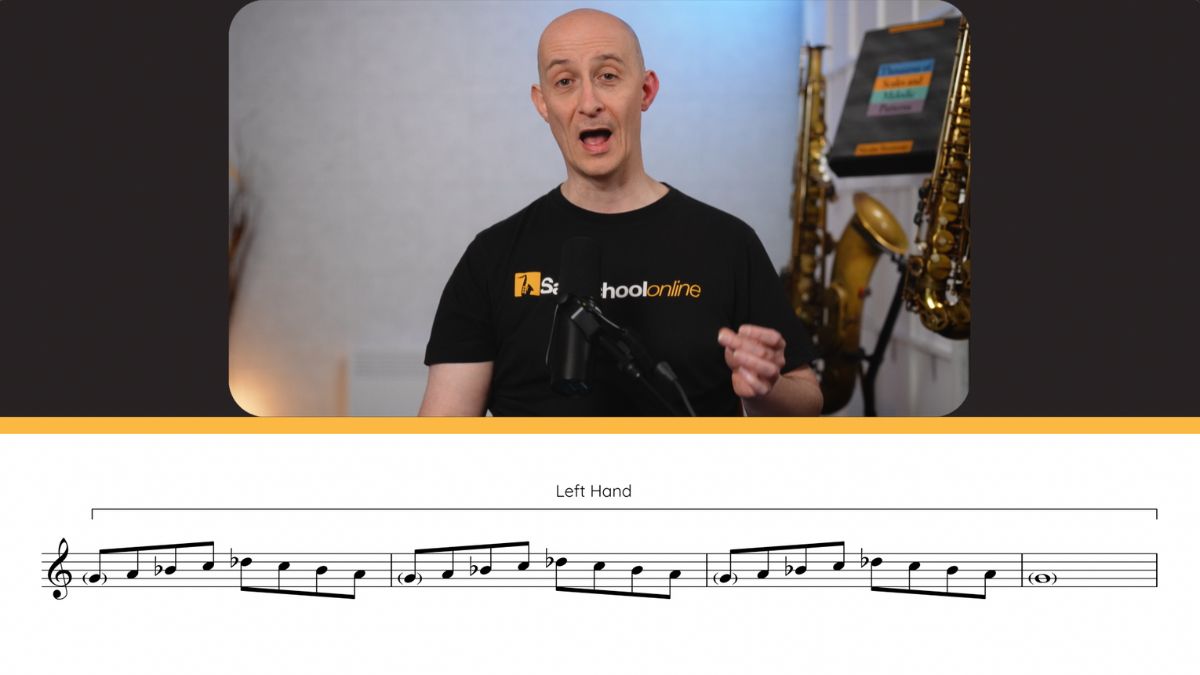
Next, focus on your left hand with a new shape: G, A, B♭, C, and C♯.
- Use the B♭ bis key for smoother transitions.
- Repeat this pattern until it becomes a fluid motion.
By isolating your hands, you’ll develop confidence in your technique, whether you’re a beginner saxophone player or advancing in your saxophone lessons.
Combining Right and Left-Hand Techniques
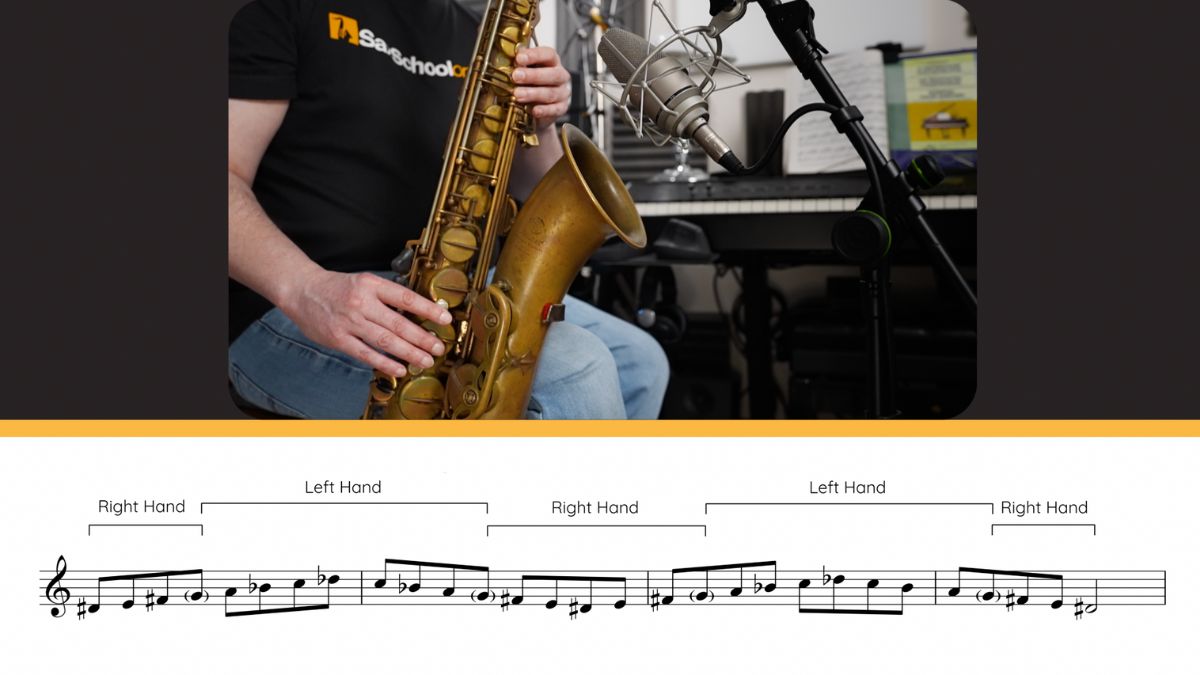
Once you’ve mastered each hand individually, it’s time to combine them:
- Play from low D♯ to high C♯, then back down.
- Add the octave key and repeat the shape in the second octave.
What you’ve just played is a diminished scale, an essential tool in jazz, film music, and classical compositions. This technique turns complicated theory into actionable practice, helping you understand how to play saxophone scales more intuitively.
Applying the Method to All Scales
This approach isn’t limited to diminished scales. You can use it for any scale or arpeggio:
- Break the saxophone into four areas: bell keys, right hand, left hand, and palm keys.
- Practice each section separately, then combine them for full-range scales.
Quote: “This method turns learning into motor action, freeing you to focus on creativity.”
This method works for all saxophone players, especially those who want to develop better improvisation skills in jazz or pop music.
Free Resources from Sax School Online
To help you get started, we’ve prepared free resources, including:
- A chart breaking down major and minor scales into bell key, right hand, left hand, and palm key shapes.
- Six-finger workout videos—quick, two-minute exercises designed to boost finger dexterity.
Follow the link here to access these tools and take your saxophone lessons to the next level.
Why This Method Works for Saxophone Players
By simplifying complex theory into actionable shapes, this method accelerates learning and builds confidence. Whether you’re just learning saxophone or looking to improve, having these shapes under your fingers will make playing—and improvising—much easier.
Don’t forget to grab your free 6-Day finger workout series from Sax School Online.
Until next time, happy playing! 🎷